Modern Indian homes are redefining how dining spaces are organised and experienced. Gone are the days when bulky cupboards hid away dinnerware. Today, homeowners are choosing a thoughtfully designed crockery unit that blends display, storage, and aesthetics into one cohesive feature.
In most urban apartments, especially 2BHK and 3BHK homes, every square foot needs to be thoughtfully used. Which means, a well-designed crockery cabinet now functions not just as storage but as a visual anchor for the dining area. Showcasing fine dinnerware, glassware and collectibles while keeping everyday essentials organised.
Design trends in 2026 also reveal a shift. Instead of generic cabinets, homeowners are opting for style-driven solutions. From minimalist glass displays to warm wooden units that reflect their interior personality. This guide explores seven standout crockery unit designs that combine beauty, practicality, and spatial intelligence, helping you choose a kitchen crockery unit or dining crockery storage unit that complements your home.
![Crockery Unit Designs for Modern Homes]](https://www.designfirst.co.in/blogs/wp-content/uploads/2026/04/chart-10.jpg)
Why Every Modern Home Needs a Crockery Unit
A thoughtfully designed crockery storage unit serves both practical and aesthetic roles in a home.
Protection for delicate dinnerware – A dedicated crockery cabinet keeps fragile plates, bowls and glassware secure. Reducing the risk of breakage.
Elevated hosting experience – During festive gatherings or dinners with guests, an elegant crockery shelf or display unit allows homeowners to showcase their finest pieces effortlessly.
Organised dining spaces – Instead of cluttered kitchen shelves, a kitchen crockery unit keeps serveware, platters and glasses neatly arranged and easily accessible.
A design feature in itself – Modern crockery units often function as statement furniture pieces, adding warmth and personality to dining rooms and open-plan living areas.
Better use of vertical space – In apartments where floor area is limited, wall-mounted or vertical units ensure storage without overwhelming the room.
Together, these advantages explain why the modular kitchen crockery unit has become an essential element of contemporary home design.
You can also explore more about how custom interior design brings function and elegance together in modern homes.
Types of Crockery Unit Designs as Per Your Home Aesthetic
Choosing a crockery unit is not merely about storage capacity. The design must resonate with the broader interior language of the home.
The material palette, colour tones and structural form of the unit should align with the surrounding architecture. In a contemporary apartment, a sleek crockery cabinet might feature clean lines and concealed handles. In a heritage-inspired home, the same unit may appear as a solid wooden statement piece.
Understanding this relationship between storage and style allows homeowners to select designs that feel integrated rather than added as an afterthought.
Read more about spaces shaped through thoughtful end-to-end home interiors.
Warm Minimalist Crockery Unit
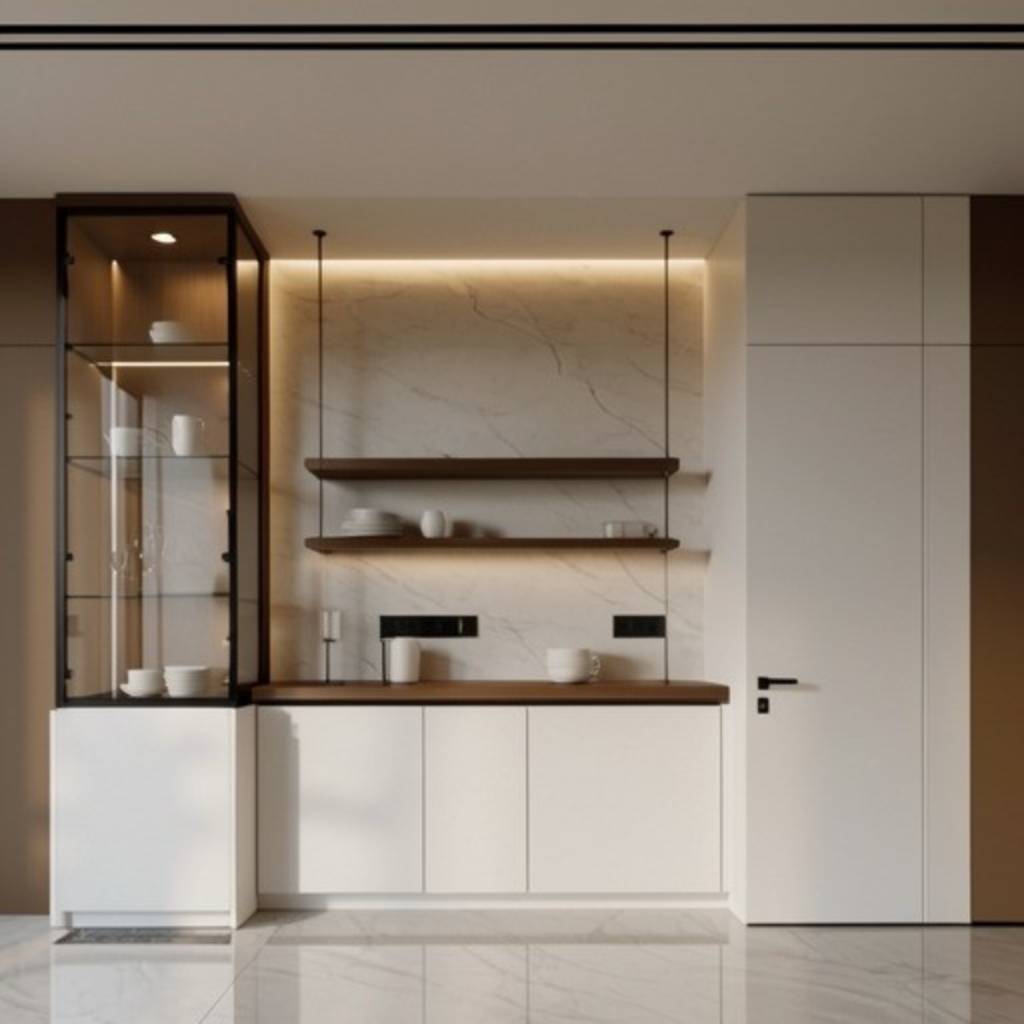
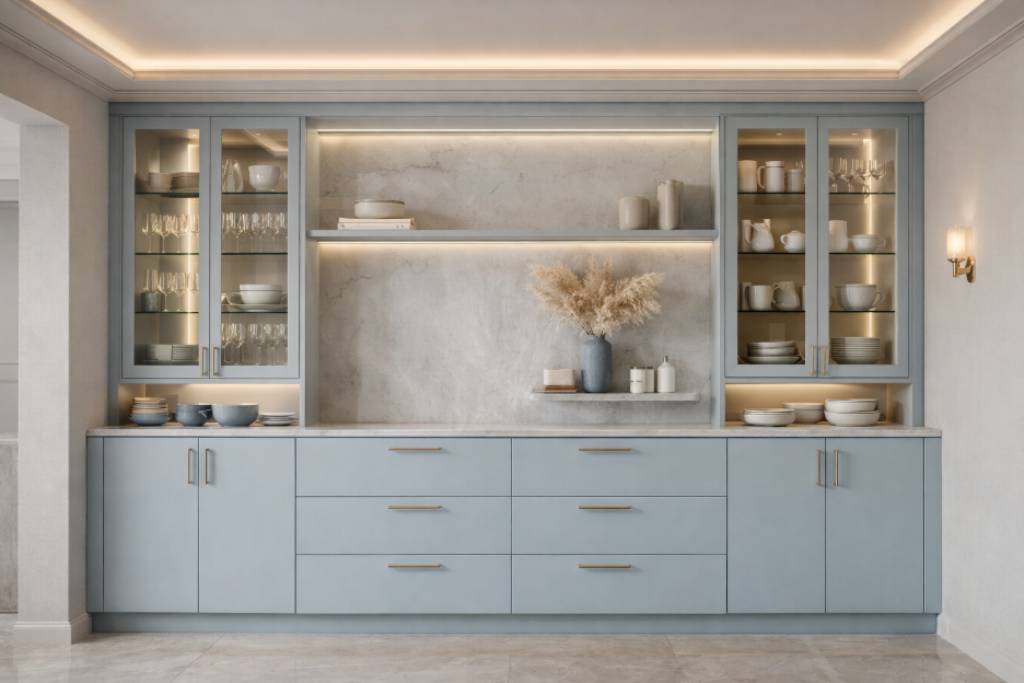
Minimalist interiors continue to dominate modern apartments. And a warm minimalist crockery unit reflects this design philosophy beautifully.
Characterized by clean geometry, neutral laminates and matte finishes, these units often feature handle-less shutters and concealed storage compartments. Their understated charm makes them particularly suitable for open dining-living spaces where furniture should blend seamlessly into the architecture.
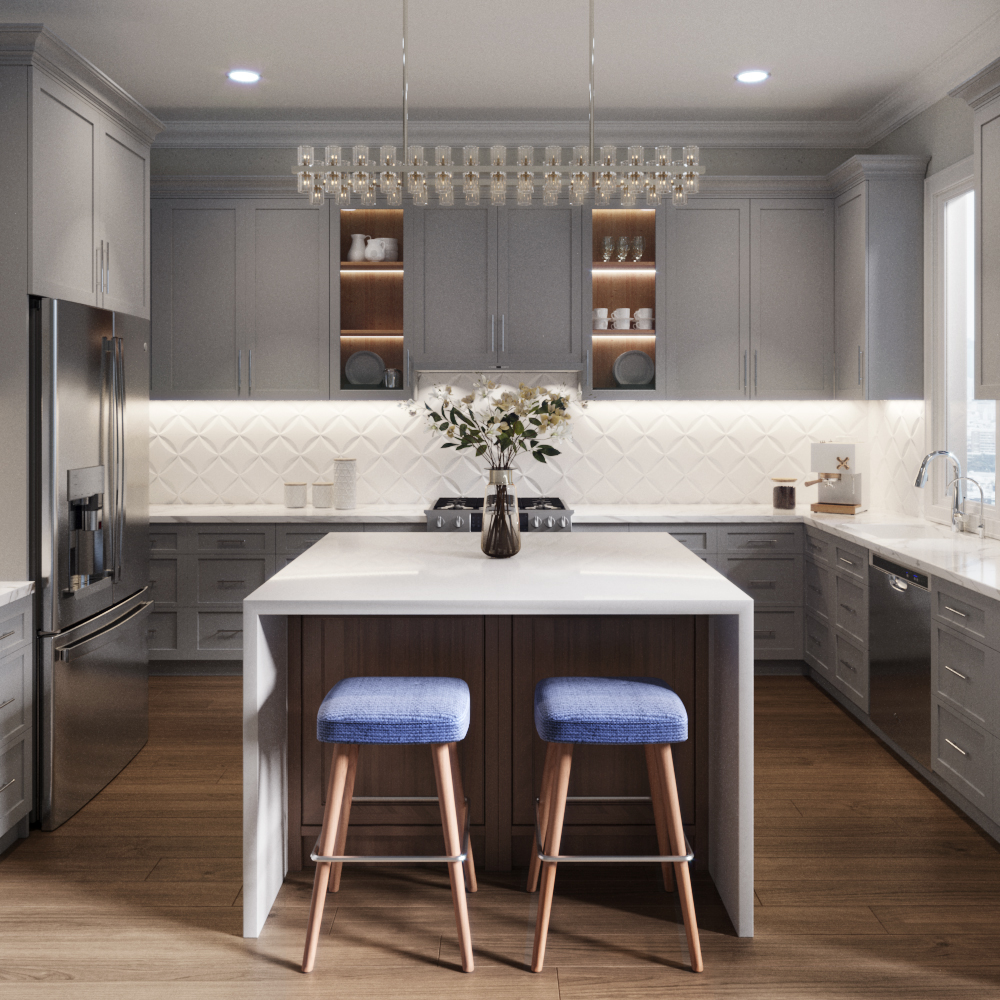
A subtle styling enhancement often used in contemporary homes is soft LED strip lighting inside the unit. This lighting gently highlights ceramics and glassware while maintaining the calm aesthetic of the space.
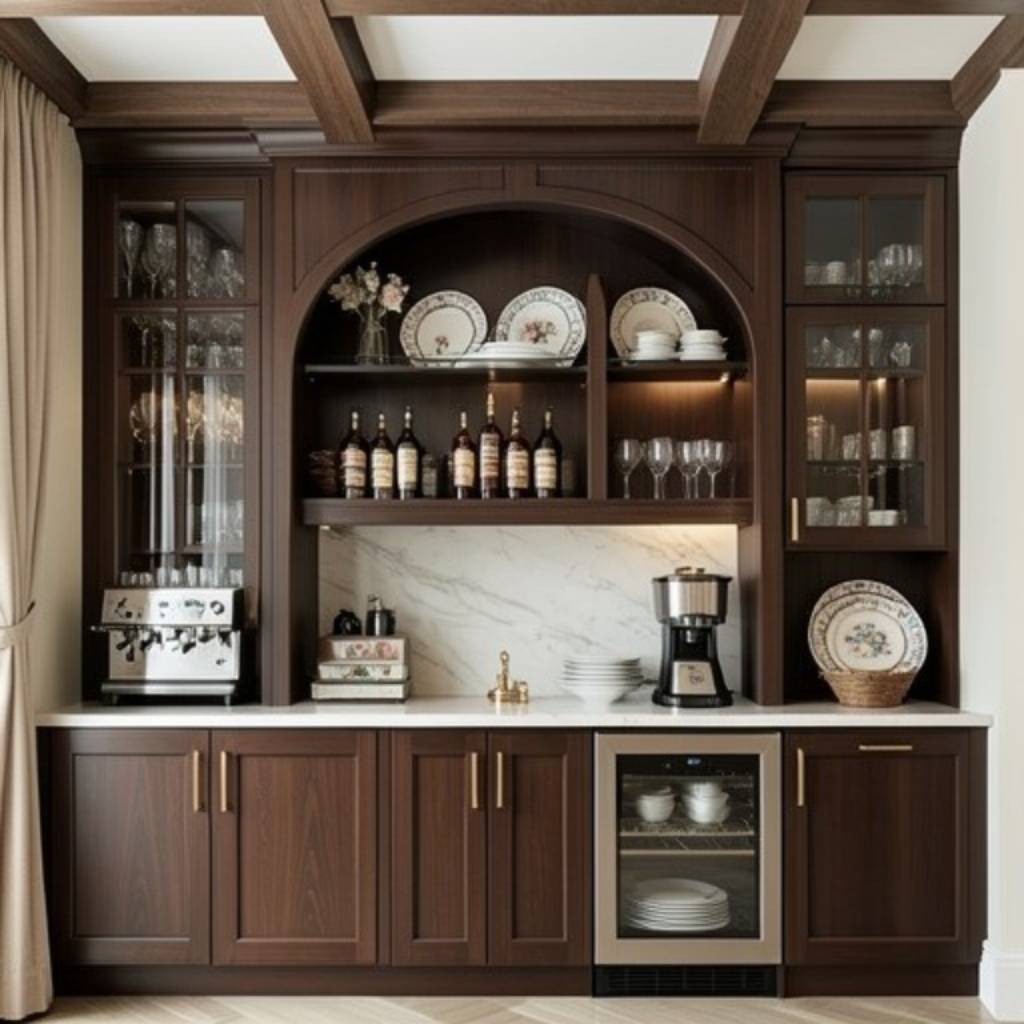
Traditional Wooden Crockery Unit
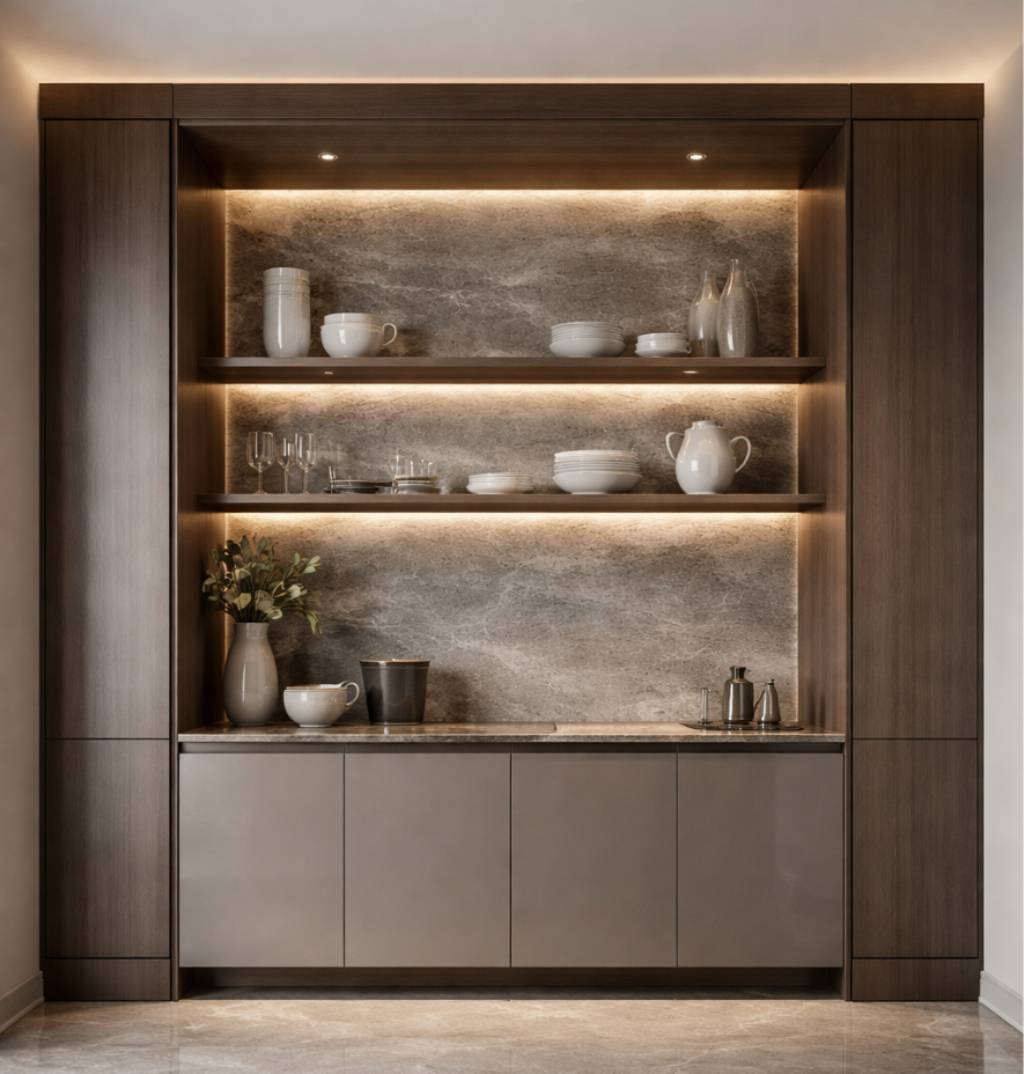
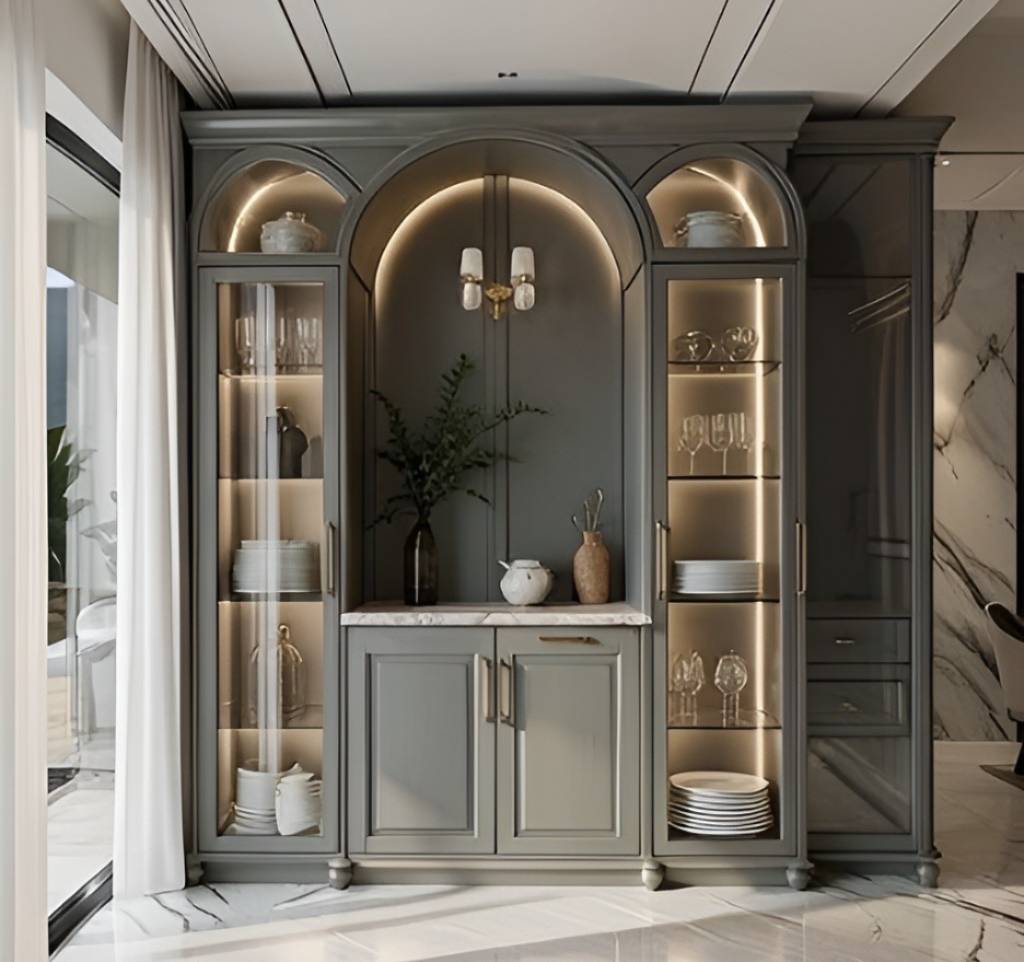
For homes that celebrate classic design, a traditional wooden crockery cabinet remains timeless.
Crafted from solid wood or high-quality veneers, these units often include carved detailing, warm stains and paneled doors that evoke heritage craftsmanship. The richness of natural wood brings depth and warmth to dining rooms, especially in villas or larger residences where space allows the furniture to breathe.
With proper care, occasional polishing and termite protection – wooden crockery units can last for decades, often becoming heirloom pieces within the home.
You can also learn more about working with a Residential interior designer for timeless, well-balanced interiors.
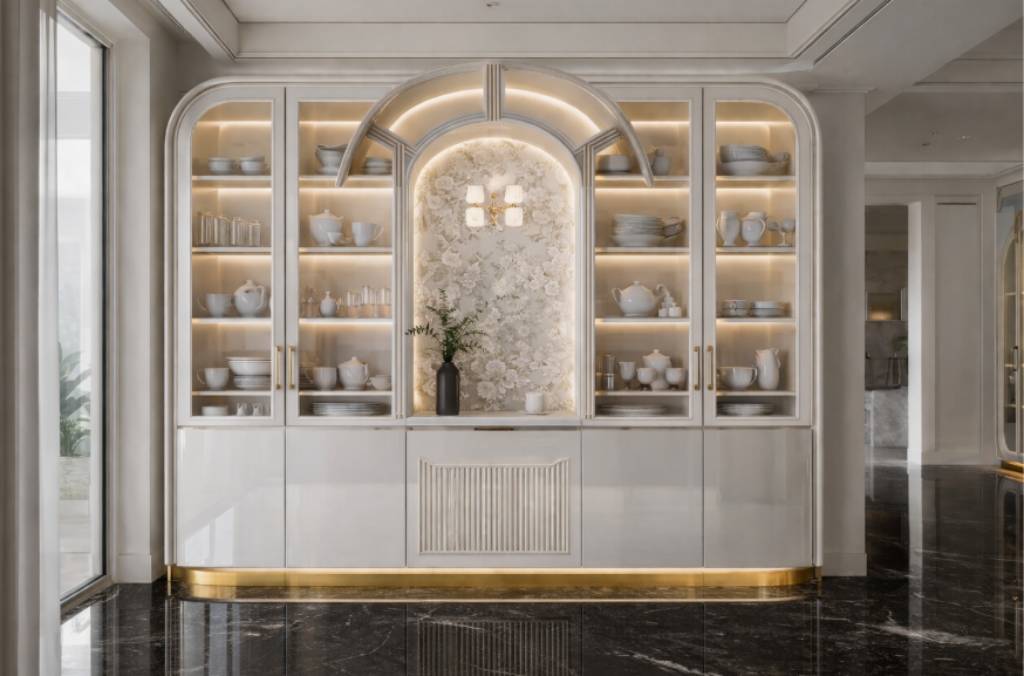
Luxury Glass Display Crockery Unit
Few furniture pieces create visual drama like a glass display crockery storage unit.
Glass shutters, integrated lighting, and glossy finishes transform the unit into a gallery for fine dinnerware. Crystal glasses, porcelain plates, and decorative pieces appear almost illuminated when placed within these cabinets.
Such units are particularly effective in formal dining rooms where presentation matters. Fingerprint-resistant coatings and soft-close shutters ensure the experience remains both beautiful and practical.
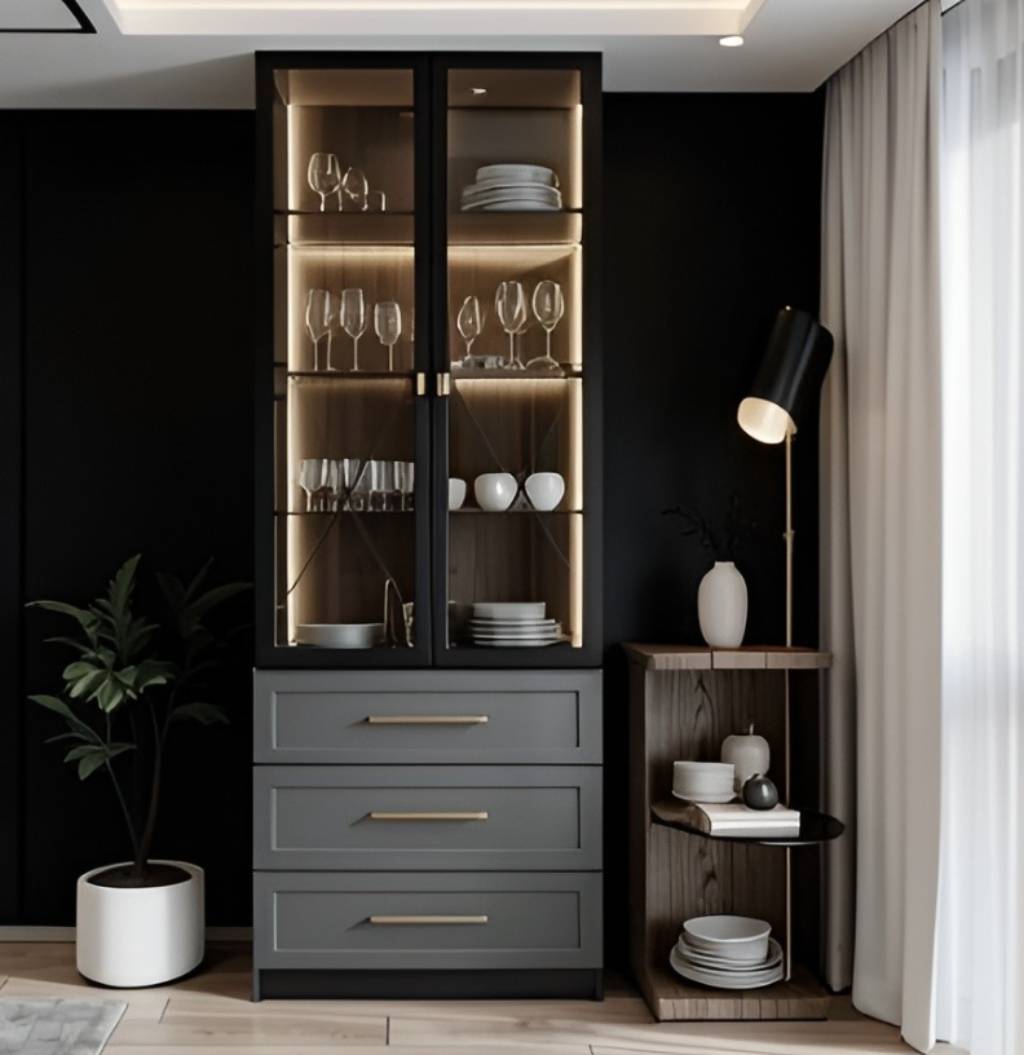
Compact Crockery Unit for Small Spaces
Urban apartments frequently require storage solutions that work within limited dimensions. A compact crockery shelf designed for small spaces addresses this need with intelligent vertical layouts.
Slim wall-mounted units or tall storage cabinets allow homeowners to maximize unused wall surfaces without crowding the room. In a typical apartment dining area, units with shallow depths often work best, keeping the passage of space comfortable while still offering generous storage.
These designs demonstrate how thoughtful planning can turn even modest walls into functional dining features.
You may also explore ideas that shape cohesive Living Room Interior Designing in open-plan homes.
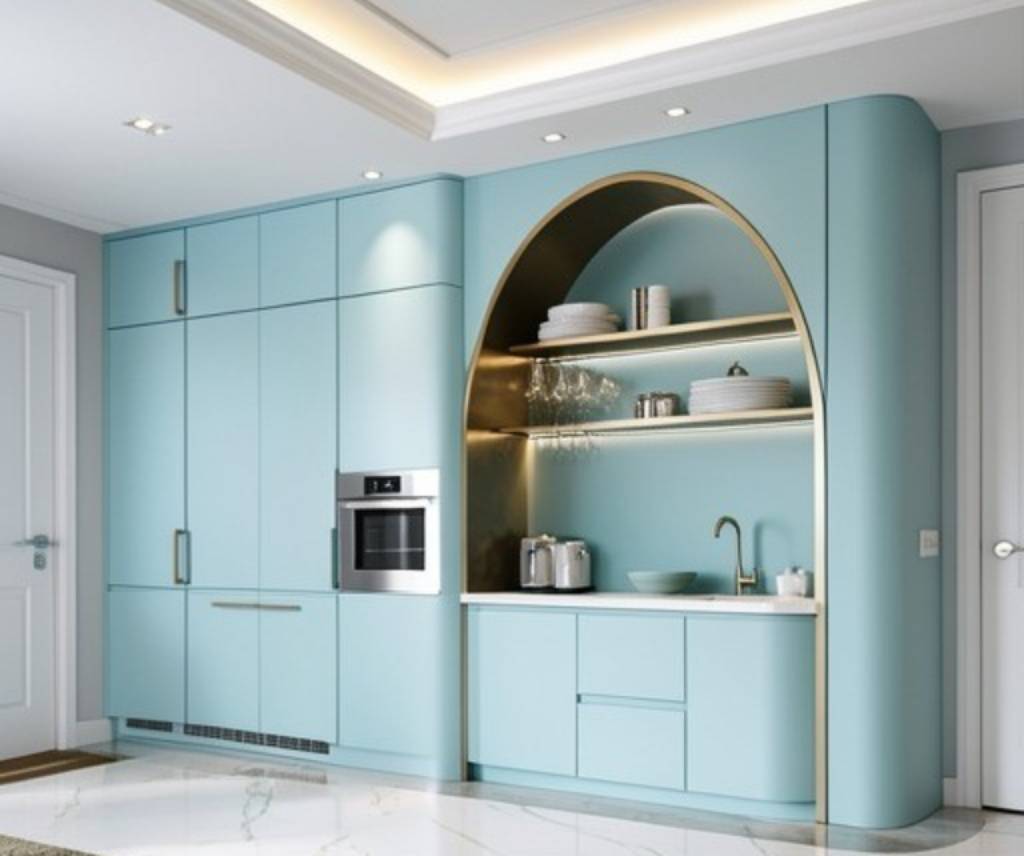
Open-Shelf & Contemporary Fusion Crockery Unit
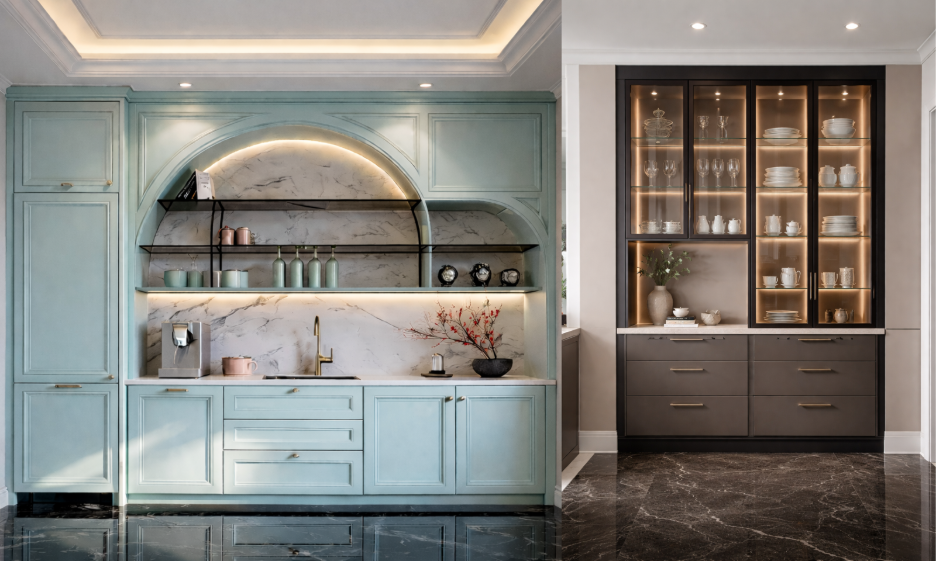
Hybrid designs combining open shelving with closed cabinets have become increasingly popular in modern interiors.
In such units, open shelves display curated pieces. Ceramic bowls, glassware, or decorative objects. While concealed cabinets hide everyday items. This combination creates a visual balance between openness and order.
The key is a restraint. Too many displayed items can create clutter, so homeowners often curate a few statement pieces and keep the rest neatly stored behind cabinet doors.
Read more design inspiration in guide on Furniture and Design ideas.
Bohemian (Boho) Style Crockery Unit
Bohemian-inspired interiors introduce warmth and artistic personality into dining spaces. A boho crockery unit often features materials such as rattan, cane, reclaimed wood, and woven textures.
Open shelves work particularly well in this style, allowing handcrafted ceramics, colorful dinnerware, and travel souvenirs to become part of the décor. Earthy tones, distressed finishes, and mixed materials add depth and informality.
A simple styling trick often used in such units is layering plants, textured runners, or brass accents to enhance the relaxed, collected aesthetic.
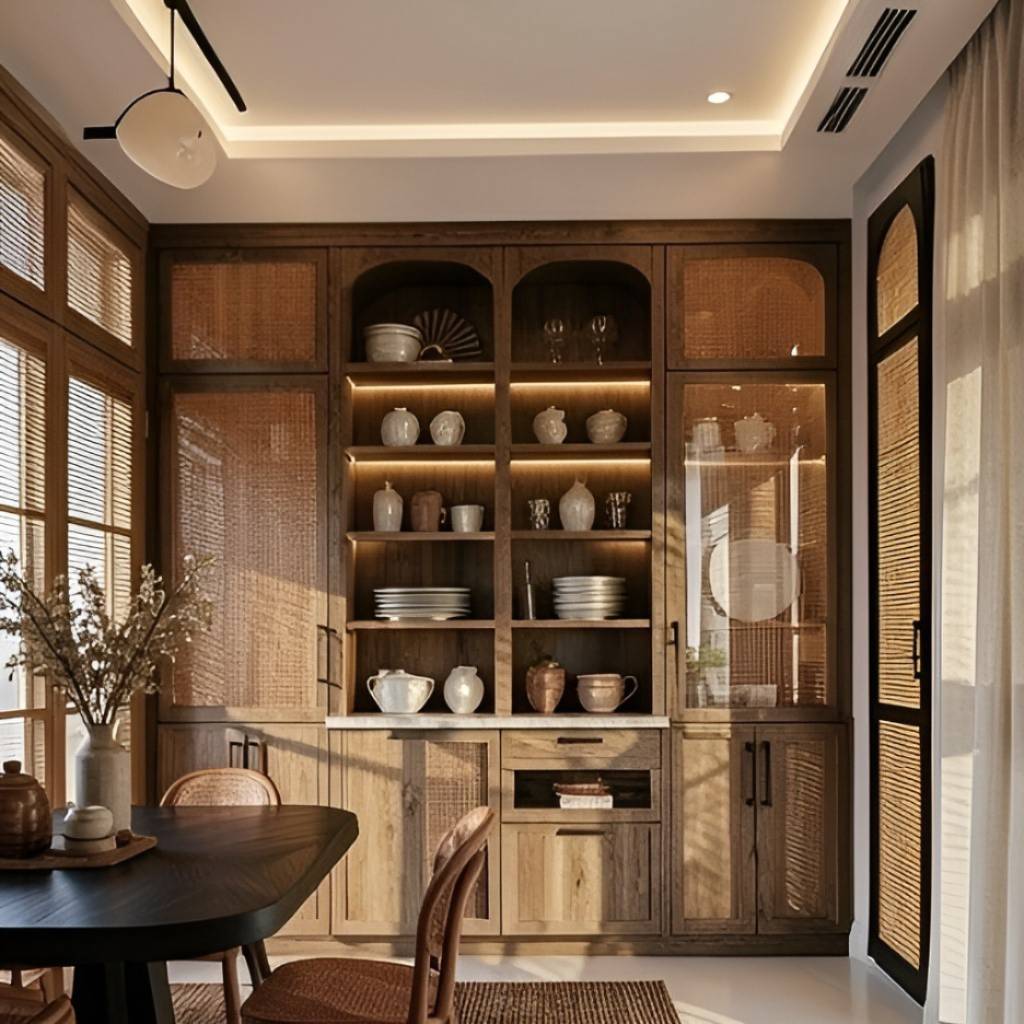
Modern Organic Crockery Unit
One of the most influential interior trends today is the modern organic aesthetic. A crockery cabinet designed in this style combines contemporary lines with natural materials.
Light oak wood, fluted panels, stone textures and matte finishes create an environment that feels calm and grounded. Soft curves replace rigid edges, and concealed storage keeps the visual composition uncluttered.
When paired with ceramic décor, indoor plants and warm ambient lighting, this style creates a dining area that feels both refined and deeply welcoming.
At Design First, this kind of aesthetic alignment is often discovered through our Style Test, which helps homeowners understand their design preferences before selecting furniture pieces like a crockery unit.
You can also discover more through the Design First home interior experience.
Best Materials for a Durable Crockery Unit
The durability of a crockery storage unit depends largely on the materials used in its construction. Laminate finishes offer versatility and easy maintenance, making them common in modern modular units. Veneers provide the warmth of natural wood while maintaining structural stability.
MDF and plywood are widely used for modular cabinetry because they balance strength and cost efficiency. Solid wood, while heavier and more premium, offers unmatched longevity and character.
Glass also plays a vital role in display-focused crockery cabinets, especially when paired with internal lighting. The ideal choice ultimately depends on the homeowner’s priorities. Durability, visual warmth, or contemporary minimalism.
How to Choose the Right Crockery Unit for Your Space
Selecting the ideal crockery unit begins with understanding the architecture of the dining space. Measuring wall width and height ensures the unit fit comfortably without overwhelming the room.
Storage needs should also guide the design. Homes that frequently host guests may require larger display sections, while smaller households may prioritise concealed storage.
Lighting is another important consideration. Integrated lights elevate the display of crockery while adding ambient warmth to the dining space.
Interior theme alignment matters equally. A modern apartment might benefit from a sleek modular unit, while a heritage home may call for a wooden cabinet with iconic detailing.
Finally, understanding one’s design personality often makes decision-making easier. Many homeowners discover their preferred aesthetic through Design First’s Style Test, which helps identify furniture styles that best suit their home and lifestyle.
You can also read the Story of Design First to understand our design philosophy more closely.
Custom vs Readymade Crockery Unit: Which is Better?
Choosing between a custom-built crockery cabinet and a ready-made design depends on lifestyle and space requirements.
Custom units offer flexibility in dimensions, materials, and finishes, making them ideal for newly designed homes where the furniture must align perfectly with the architecture. Readymade units, however, provide faster installation and often suit rental homes or temporary living arrangements.
In design-led homes where aesthetics and proportions are carefully considered, custom furniture often creates a more harmonious result.
Common Mistakes to Avoid When Buying a Crockery Unit
One common mistake is selecting a unit without accurate measurements. Oversized furniture can dominate a dining room and disrupt circulation.
Another oversight is ignoring weight capacity. Crockery units must support the weight of plates, bowls, and glassware safely.
Glass quality is equally important. Poor-quality glass panels may compromise durability and safety.
Lighting is sometimes overlooked, yet it plays a significant role in how displayed crockery appears. Finally, homeowners often underestimate future storage needs, resulting in overcrowded shelves later.
FAQ
Regular dusting, gentle cleaning solutions, and avoiding excessive moisture help preserve both wooden and laminate surfaces.
From festive dinners to quiet family meals, the dining space often becomes the heart of the home. A carefully designed crockery storage unit helps keep that space organised while adding warmth and character to the interiors. With the right design, materials and proportions, a crockery unit becomes more than just furniture. It becomes part of how a home welcomes and hosts.
Freestanding units work well in spacious dining rooms, while wall-mounted units are ideal for compact apartments where floor space must remain open.
Most units range between 5–7 feet in height and 3–5 feet in width, depending on available wall space and storage needs.
Plywood with veneer or laminate finishes is often preferred for durability and design flexibility. Solid wood works well for classic interiors, while glass panels enhance display-focused crockery cabinets.
Toughened or tempered glass is recommended because it provides durability and safety while maintaining a sleek display appearance.