A staircase has evolved far beyond its functional role of connecting two floors. In modern luxury homes, it influences circulation, defines spatial flow, and often becomes one of the strongest architectural features within the interior. From sculptural forms to carefully selected materials, today’s staircase designs combine craftsmanship with practicality to create spaces that feel refined and well considered.
The right staircase should complement the home’s architecture while supporting everyday comfort, safety, and long term durability. Whether you’re building a new home or planning a renovation, understanding different staircase styles, layouts, and materials can help you make a decision that balances visual appeal with lasting functionality.
What Makes a Modern Staircase Design Stand Out Today?
Modern staircase design is no longer defined by decoration alone. It has become an architectural feature that influences how a home looks, feels, and connects across different levels. Contemporary staircases focus on clean geometry, refined detailing, and material combinations that complement the overall interior rather than compete with it.
Key characteristics of modern staircase design include:
- Architectural continuity: Designed to integrate naturally with the home’s layout and interior style.
- Visual openness: Open risers, slim profiles, and transparent elements create a lighter, more spacious feel.
- Material expression: Stone, wood, metal, and glass add texture and craftsmanship through their natural qualities.
- Minimal detailing: Concealed supports, seamless joints, and understated railings create a clean, balanced appearance.
These elements define today’s luxury staircase designs, where aesthetics and architecture work together to create lasting visual impact.
Achieving this level of integration often requires collaboration with an experienced residential interior designer, particularly when the staircase is intended to become part of the home’s overall architectural composition.
Modern Staircase Design Ideas for Luxury Homes
Modern staircase designs combine form, materials, and craftsmanship to create striking architectural features. These ideas highlight different styles that enhance functionality while complementing luxury home interiors.
Floating Staircase Design
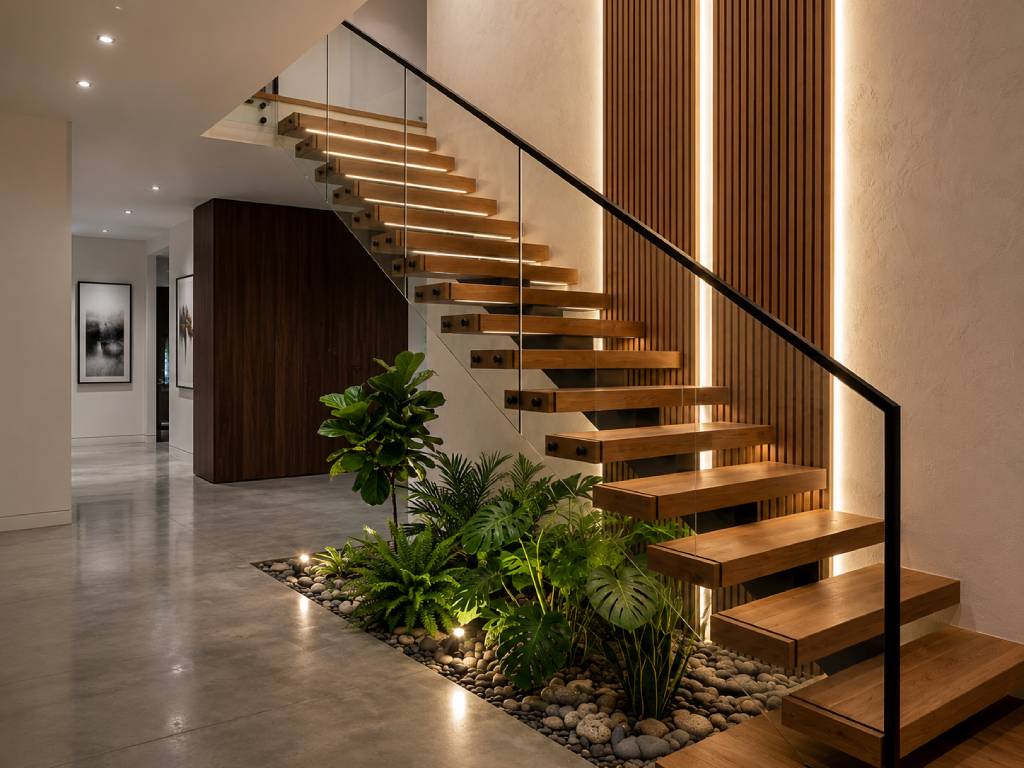
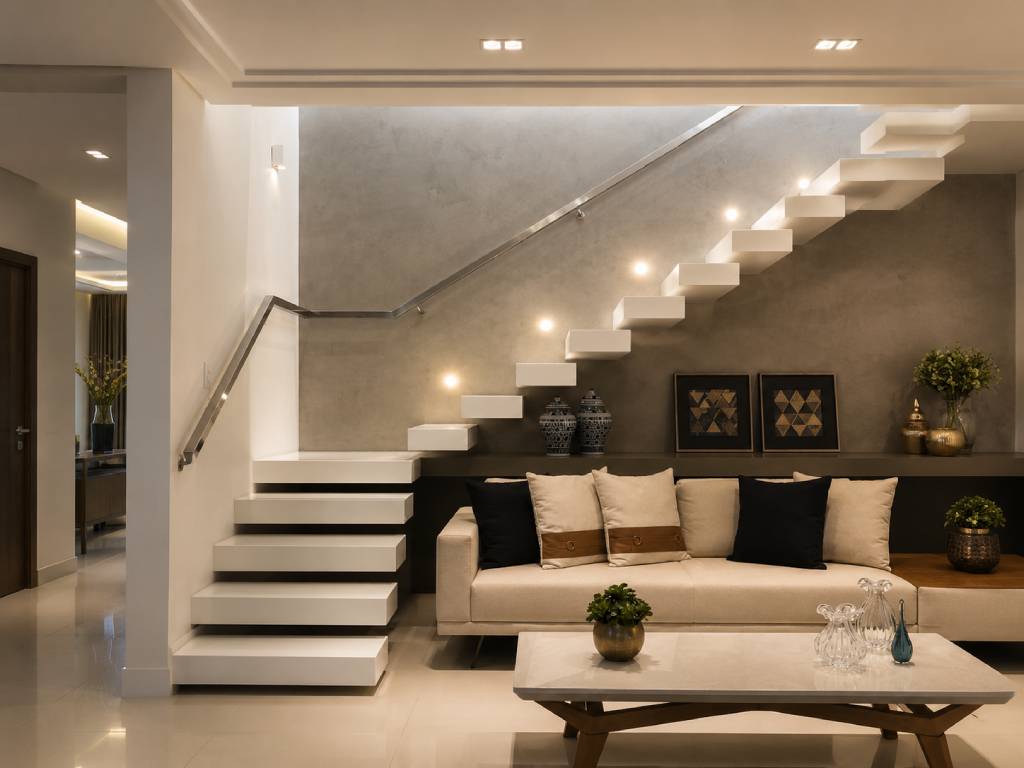
A floating staircase creates a sense of openness by concealing its structural supports, allowing each tread to appear suspended. This uninterrupted form encourages natural light to travel across spaces and makes interiors feel visually larger.
Achieving this effect requires early structural planning and precise engineering, making it an ideal choice for contemporary homes where clean lines, minimal detailing, and open layouts define the overall architectural language.
Stone Statement Staircases
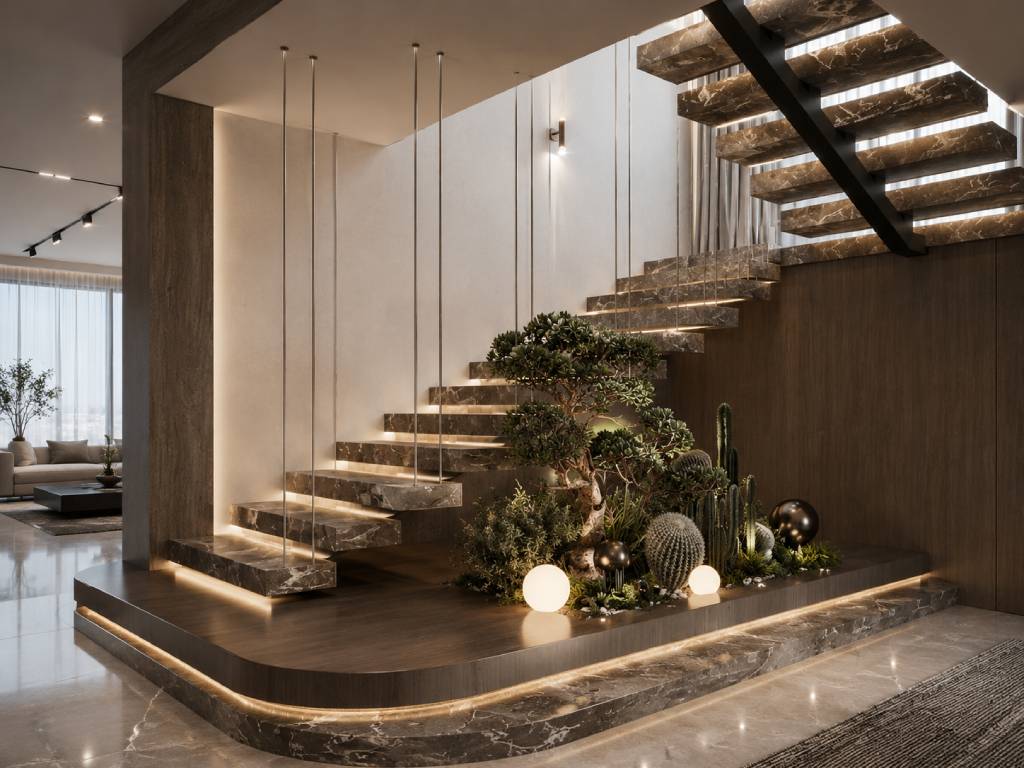
Stone staircases introduce texture, depth, and permanence through materials such as marble, granite, and limestone. Their impact extends beyond the choice of stone, with slab selection, veining continuity, edge detailing, and surface finish all influencing the final result.
When paired with carefully planned lighting, a natural stone staircase becomes a striking architectural feature that combines craftsmanship, durability, and lasting visual appeal.
Metal and Wood Staircases
The combination of metal and wood balances structural precision with natural warmth, creating staircases that feel contemporary without appearing overly industrial. Slim metal frameworks provide a clean architectural profile, while timber treads or handrails soften the composition and improve comfort underfoot.
Timber staircases are often planned alongside custom made luxury furniture to maintain consistency in wood species, finishes, and craftsmanship across adjoining living spaces.
Variations in wood species, metal finishes, and detailing allow this combination to complement both minimalist interiors and richly layered luxury homes.
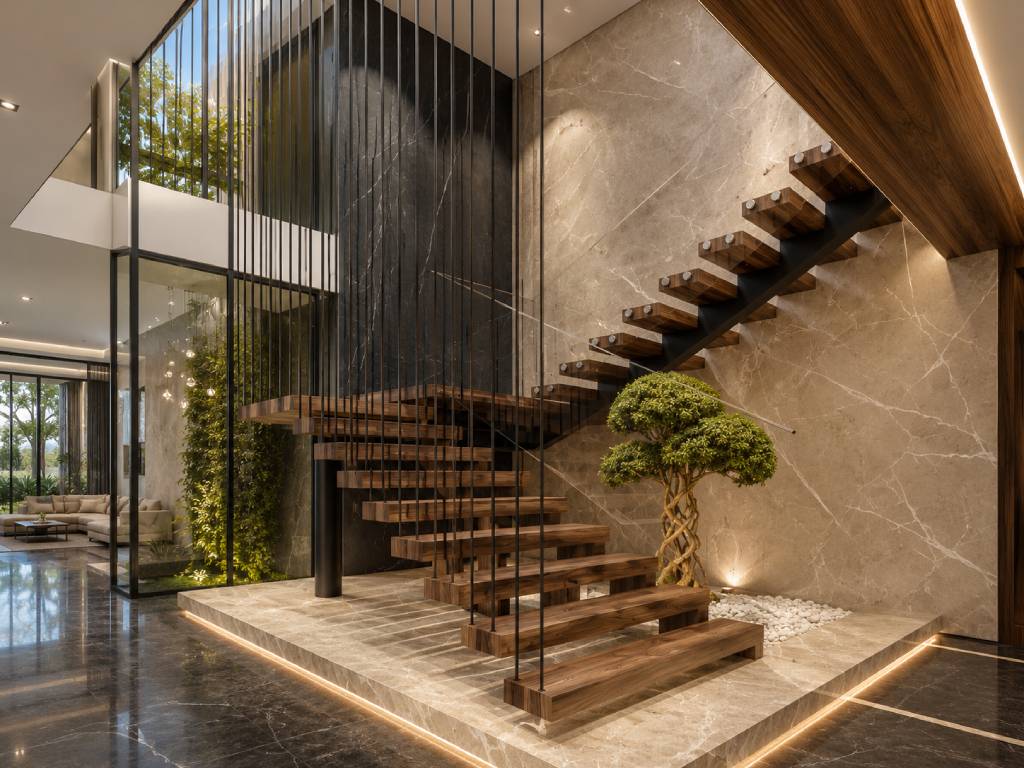
Frameless Glass Staircases
Frameless glass staircases maximise openness by reducing visual barriers and allowing daylight to move freely between floors. Low iron toughened glass offers exceptional clarity, while minimal hardware keeps attention on the surrounding architecture.
Alongside their clean appearance, these staircases require regular maintenance to preserve transparency, making high quality materials and precise installation essential for long term performance.
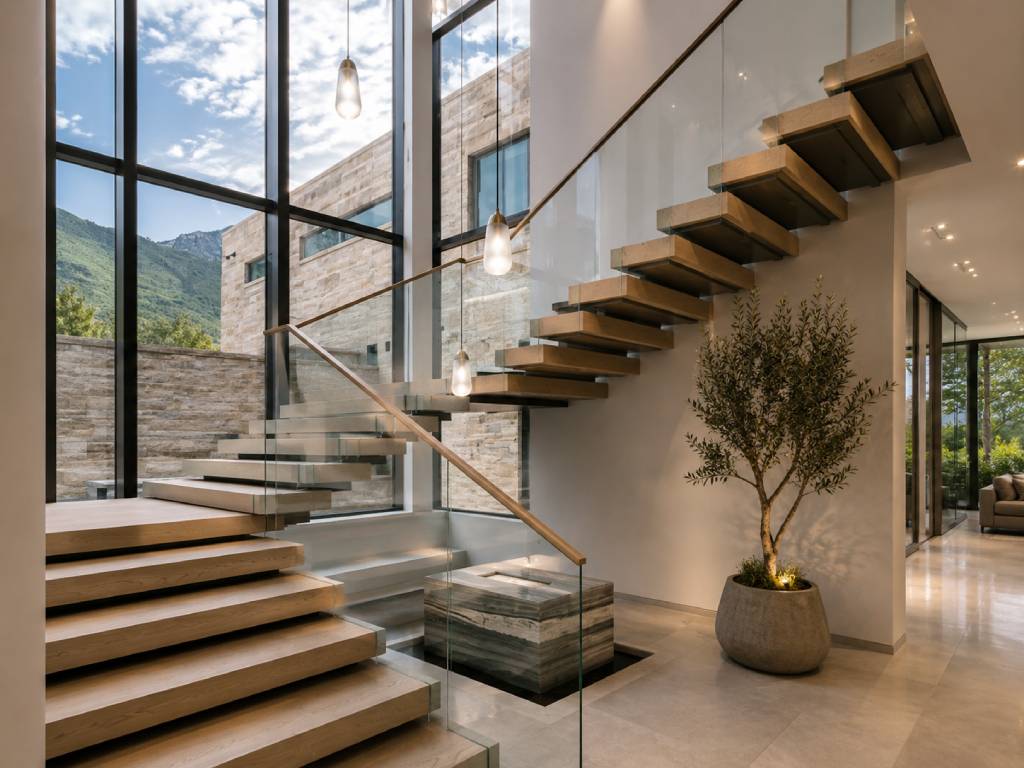
Minimalist Linear Staircases
Minimalist linear staircases rely on proportion, precision, and restrained detailing rather than decorative elements. Consistent tread dimensions, clean geometry, concealed junctions, and integrated lighting create a refined appearance that complements contemporary architecture.
Because every detail remains visible, the quality of materials and craftsmanship becomes even more important, resulting in a staircase that expresses simplicity through thoughtful execution rather than excess.
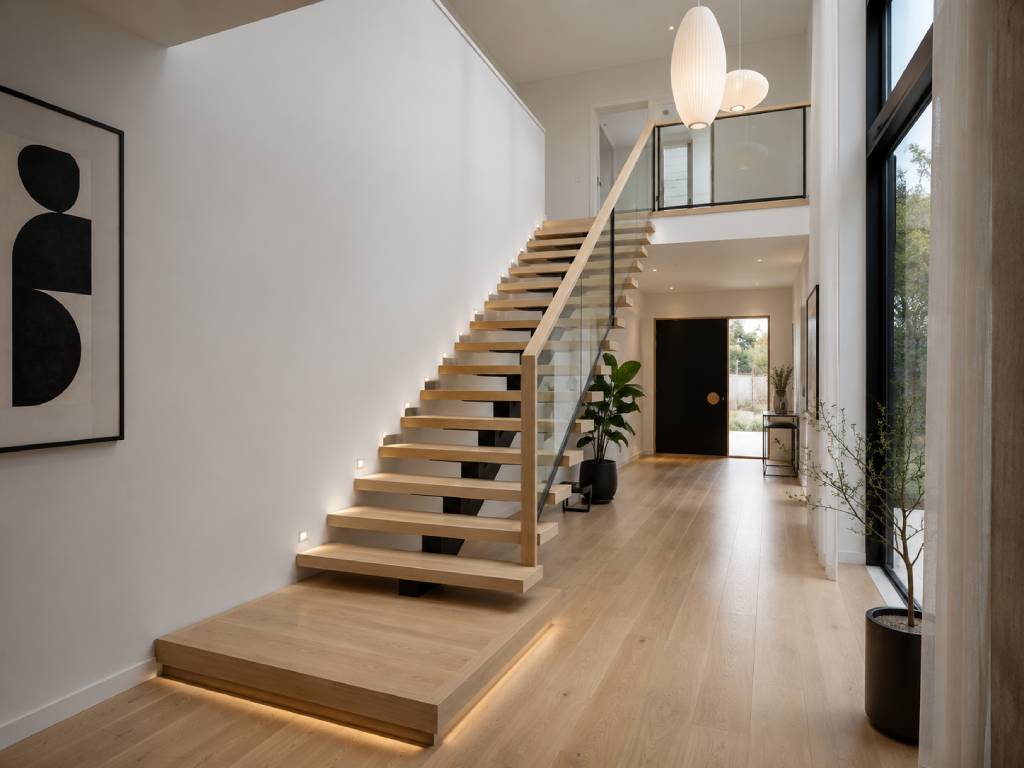
Luxury Staircase Types and Where They Work Best
The layout of a staircase determines how comfortably people move through a home and how naturally it fits within the available floor plan. While some layouts maximise space, others create a stronger architectural presence. Choosing the right configuration early in the design process helps balance circulation, comfort, and aesthetics.
Straight Staircase
The straight staircase remains one of the most efficient layouts because it provides uninterrupted movement between floors and simplifies construction.
Its clean geometry allows designers to experiment with materials, railings, or feature lighting without changing the staircase’s overall form. This versatility makes it suitable for homes that favour simplicity while still allowing plenty of scope for customisation.
Design Insight: A straight staircase often appears more premium when the surrounding details do the work. Natural stone treads, timber panelling, or statement lighting can create visual interest without introducing unnecessary complexity.
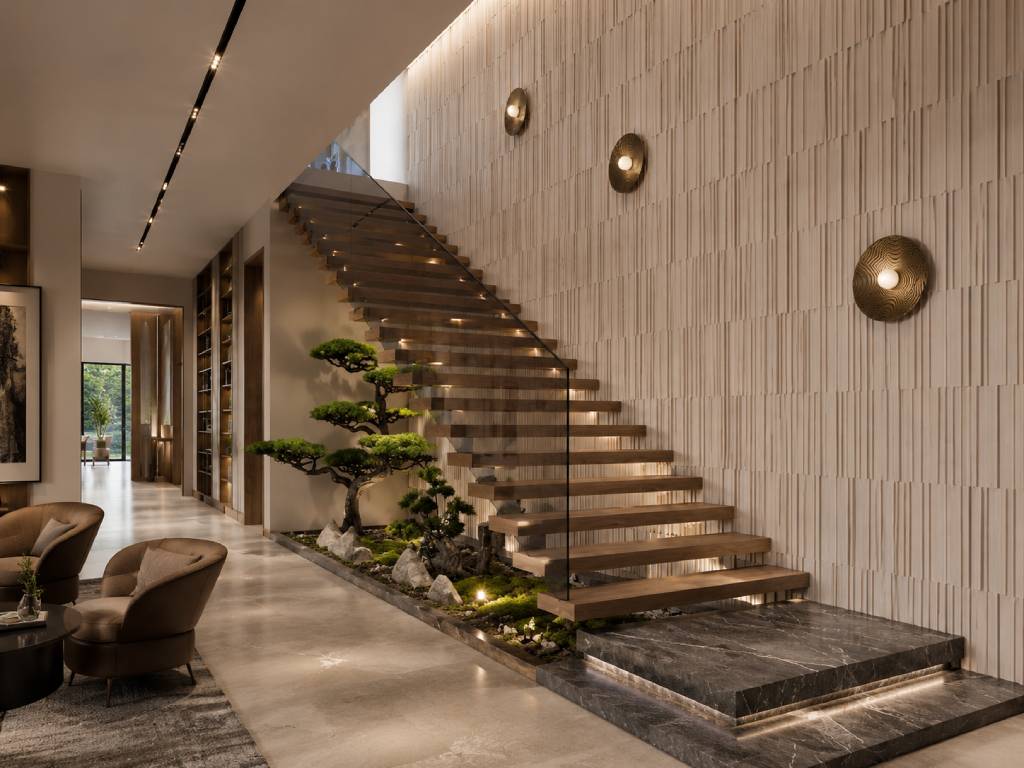
L Shaped Staircase
An L shaped staircase introduces a landing that changes the direction of movement, making the transition between floors feel more gradual. More than just improving circulation, the landing naturally divides public and private spaces, making this layout particularly effective in family homes.
Why homeowners choose it
- Creates a more comfortable climbing experience.
- Adds privacy by reducing direct sightlines between floors.
- Offers opportunities for windows, artwork, or decorative lighting at the landing.
U Shaped Staircase
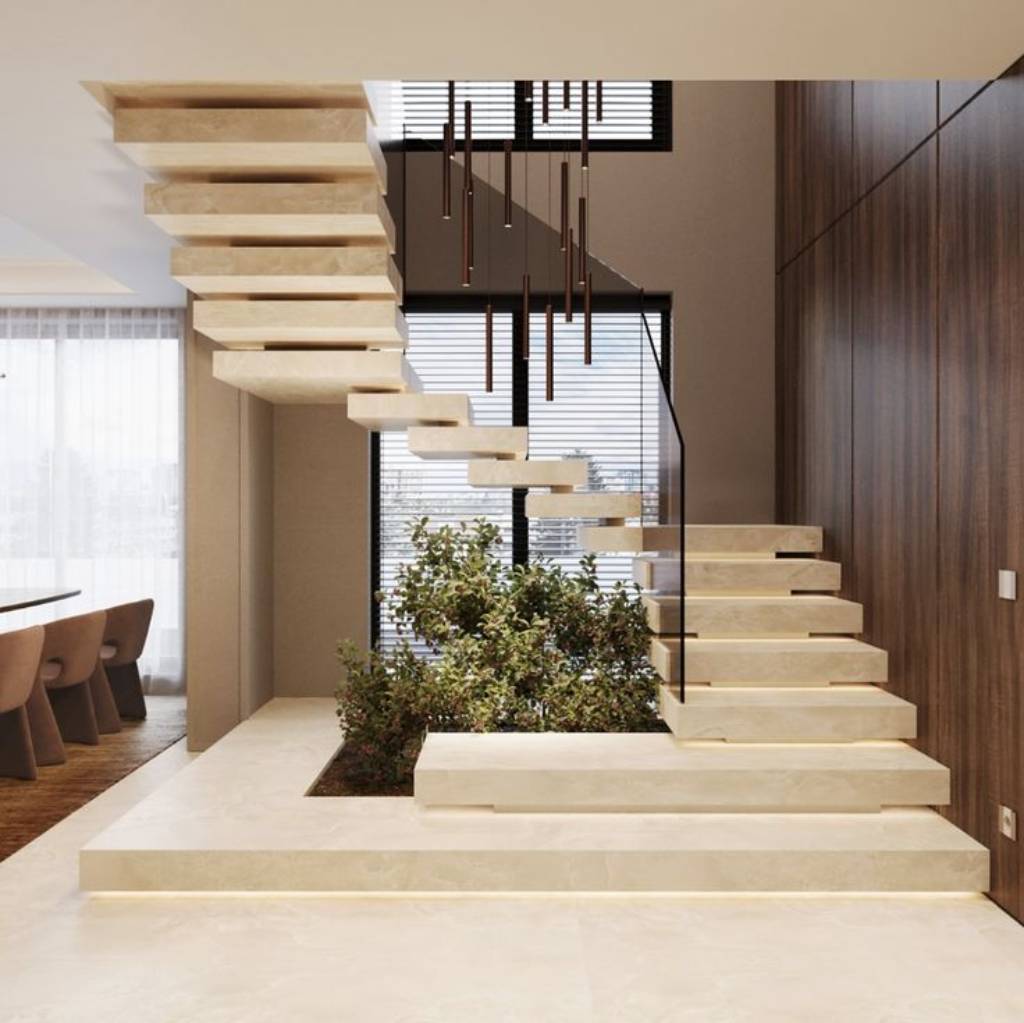
A U shaped staircase creates a balanced architectural composition by connecting two parallel flights with a landing. The symmetrical layout naturally draws attention and works particularly well in homes where the staircase is intended to become a central design feature rather than simply a circulation element.
Planning Tip: A U shaped staircase generally requires more floor area than straight or L shaped layouts. It works best when the staircase is incorporated into the architectural plan from the beginning rather than fitted into leftover space.
Spiral Staircase
A spiral staircase is designed around a central column, allowing it to occupy a relatively small footprint. Its compact form makes it a practical solution for terraces, lofts, and secondary circulation, although it may be less convenient for everyday family use.
Advantages Considerations Occupies minimal floor space Narrower treads can reduce comfort Creates a distinctive visual feature Moving large furniture can be difficult Suitable for secondary access Less practical as the primary staircase 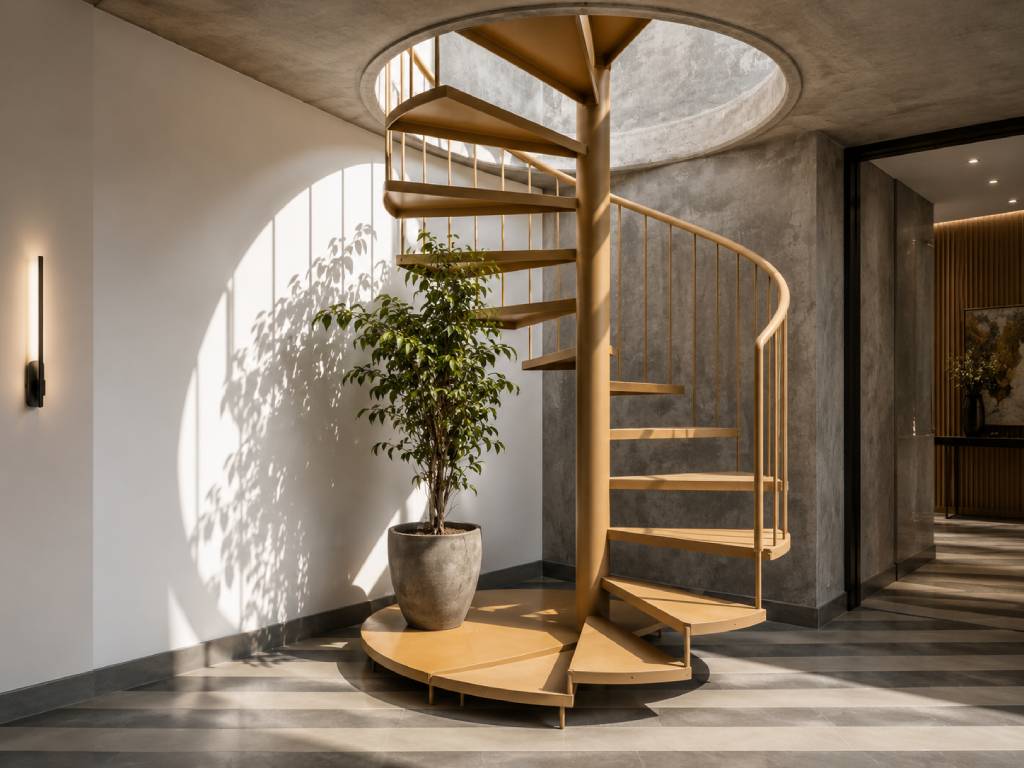
Curved Staircase
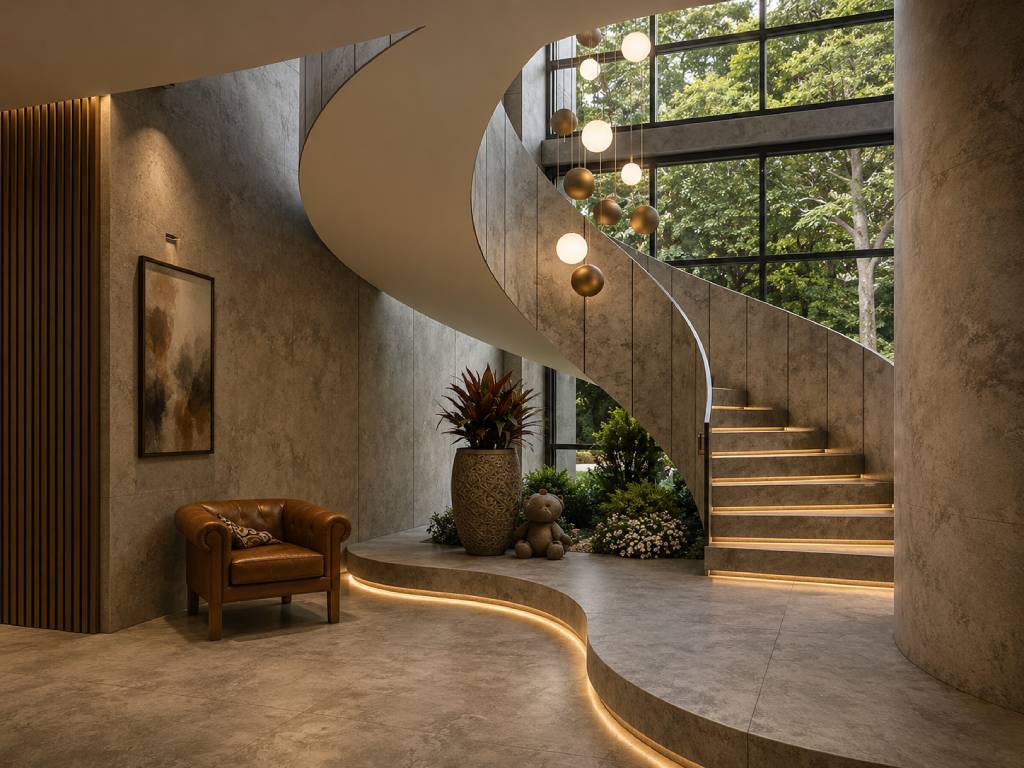
A curved staircase follows a gentle arc rather than sharp directional changes, creating a softer visual transition between floors. Unlike a spiral staircase, its wider radius allows for more comfortable movement while introducing a sculptural quality that complements grand entrance foyers and double height spaces.
Did you know?: Curved staircases rely on proportion as much as craftsmanship. The radius, railing profile, and material continuity all influence whether the staircase feels graceful or visually overwhelming within the space.
Best Materials for Modern Staircase Design
The material you choose shapes not only the appearance of a staircase but also its durability, maintenance, and how it complements the surrounding interiors.
Rather than selecting materials based on trends, consider how they perform over time and how they interact with natural light, flooring, and wall finishes. Many luxury homes combine two or more materials to achieve a balanced look that feels both functional and visually
| Material | Best Known For | Consider Before Choosing |
| Marble | Premium appearance with unique natural veining | Requires sealing and a suitable finish for better slip resistance |
| Wood | Adds warmth and natural texture | Needs periodic maintenance to preserve its finish |
| Metal | Slim structural profiles and contemporary detailing | Finish should complement the overall interior palette |
| Glass | Creates openness and maximises natural light | Requires regular cleaning to maintain clarity |
| Concrete | Minimalist and architectural aesthetic | Best planned during the structural design stage |
Luxury Stair Railing Designs Worth Considering
A stair railing contributes as much to the staircase’s character as the steps themselves. Beyond providing safety, it defines the visual style, influences how open the staircase feels, and ties together surrounding materials. The right railing should complement the staircase instead of competing with it.
Material selection and detailing are equally important when designing railings for outdoor spaces, making it worthwhile to coordinate the staircase with the home’s balcony grill design for a more cohesive architectural language.
Popular railing styles include:
- Glass railings for uninterrupted views and brighter interiors.
- Metal balustrades with slim vertical profiles for contemporary homes.
- Wooden handrails that introduce warmth and tactile comfort.
- Cable railings for minimalist spaces with an open visual connection.
- Custom metal or brass detailing that adds subtle craftsmanship without overwhelming the staircase.
Designer tip: The most effective railing designs feel proportional to the staircase. Oversized balustrades can make even a spacious staircase appear heavier, while refined profiles often create a lighter and more balanced composition.
Key Factors to Consider Before Designing a Staircase
A staircase should be planned alongside the home’s architectural layout rather than introduced as an independent design element. Spatial planning, structural feasibility, material selection, and long term usability collectively determine how well the staircase performs over time.
Essential planning considerations include:
- Alignment with the overall floor plan and circulation.
- Appropriate staircase dimensions for comfortable movement.
- Structural requirements based on the chosen layout.
- Material compatibility with adjoining flooring and finishes.
- Integration of natural and artificial lighting.
- Safety through suitable tread proportions, handrails, and surface finishes.
- Maintenance requirements associated with different materials and detailing.
Designing a staircase involves balancing architecture, materials, craftsmanship, and long term usability. For homes where these decisions are developed together, turnkey interior solutions provide a more coordinated approach, allowing the staircase to become an integrated part of the overall design rather than a standalone feature.
FAQ
Yes, but it needs careful planning. Compact L-shaped layouts or space-efficient spiral staircases can work well when integrated early into the floor plan.
Absolutely. Well-placed lighting improves safety at night and enhances the overall feel of the staircase design without drawing too much attention.
Very. A good handrail staircase design supports safety while also influencing how heavy or light the staircase looks. Slim metal feels modern, while wood adds warmth.
Yes, when engineered correctly. Structural planning and proper railing detailing ensure safety without compromising the visual lightness.
Underestimating space requirements and ignoring lighting are two frequent mistakes. Slippery materials and inconsistent riser heights can also affect daily comfort.
Most residential staircases follow riser heights between 150–180 mm and tread depths around 250–300 mm. These proportions help maintain a natural walking rhythm and prevent the staircase from feeling too steep
Granite, solid hardwood and well-finished metal structures are known for durability. The material should also match how heavily the staircase will be used daily.
The best staircase design depends on your layout and daily use. Straight staircases work well in longer plans, while L-shaped or U-shaped layouts often feel more comfortable in family homes.