Walk through any well designed home and one detail quietly connects every space: the doors. Some create a memorable first impression, while others bring warmth, privacy, or character to the rooms they serve.
A wooden door design is more than a functional element. It reflects your home’s architectural style and contributes to a cohesive design language. From the main entrance to bedrooms, bathrooms, and pooja rooms every woodwork door design should respond to the purpose, scale, and personality of the space it belongs to.
How wooden doors bring warmth and character to your home
Wood brings warmth and character to every space through its natural grain, texture, and colour variations. Whether used as a grand entrance, a bedroom door, or a subtle room divider, a thoughtfully chosen wooden door design for home enhances the overall architecture without overpowering it.
From sleek flush doors to intricately carved styles, wood adapts to different aesthetics with ease. Picking complementary designs across the home creates a cohesive visual flow while allowing each space to retain its own identity.
10 wooden door design ideas for luxury homes
Every wooden door design creates a unique impression. The right choice depends on your home’s architecture, the room it serves, and the atmosphere you want to create.
Teak Brass Main Door
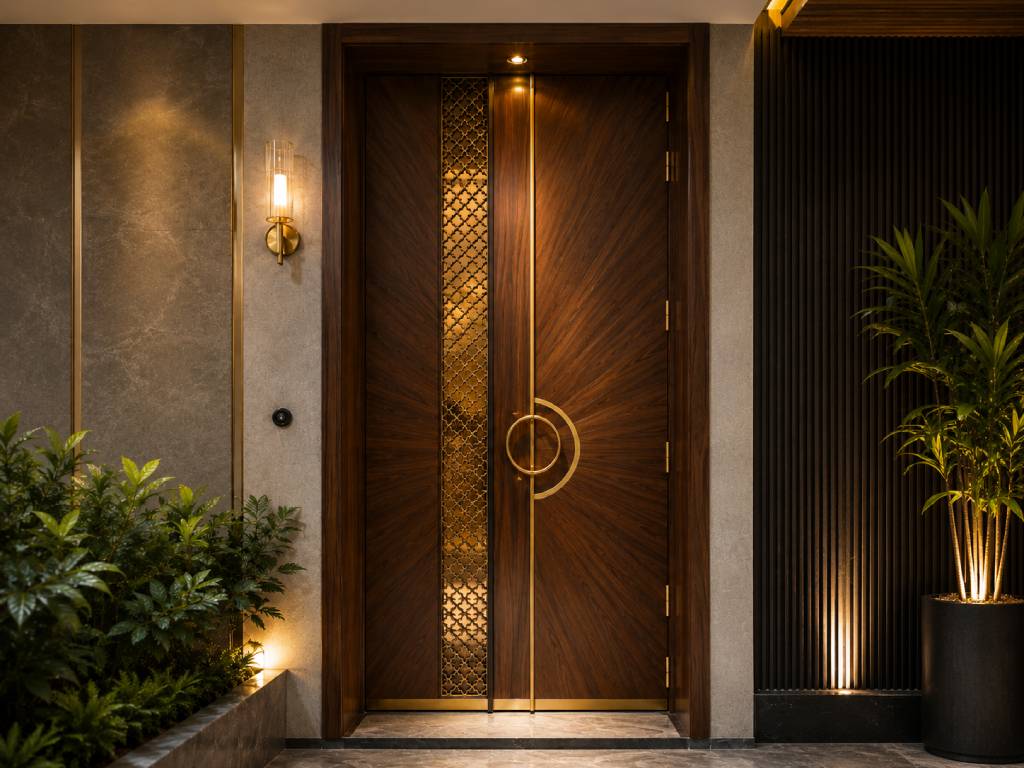
The main entrance is often the first opportunity to express your home’s personality. A teak door with subtle brass detailing creates an inviting first impression by combining the richness of natural timber with refined metallic accents.
Instead of relying on ornamentation, slim brass strips or geometric inlays add definition while allowing the grain of the wood to remain the focal point. This balance makes the entrance feel elegant without appearing excessive.
Design Insight: Brass accents are most effective when they complement the timber rather than dominate it. Restrained detailing generally remains visually appealing for much longer than highly decorative patterns.
Natural Oak Flush Door
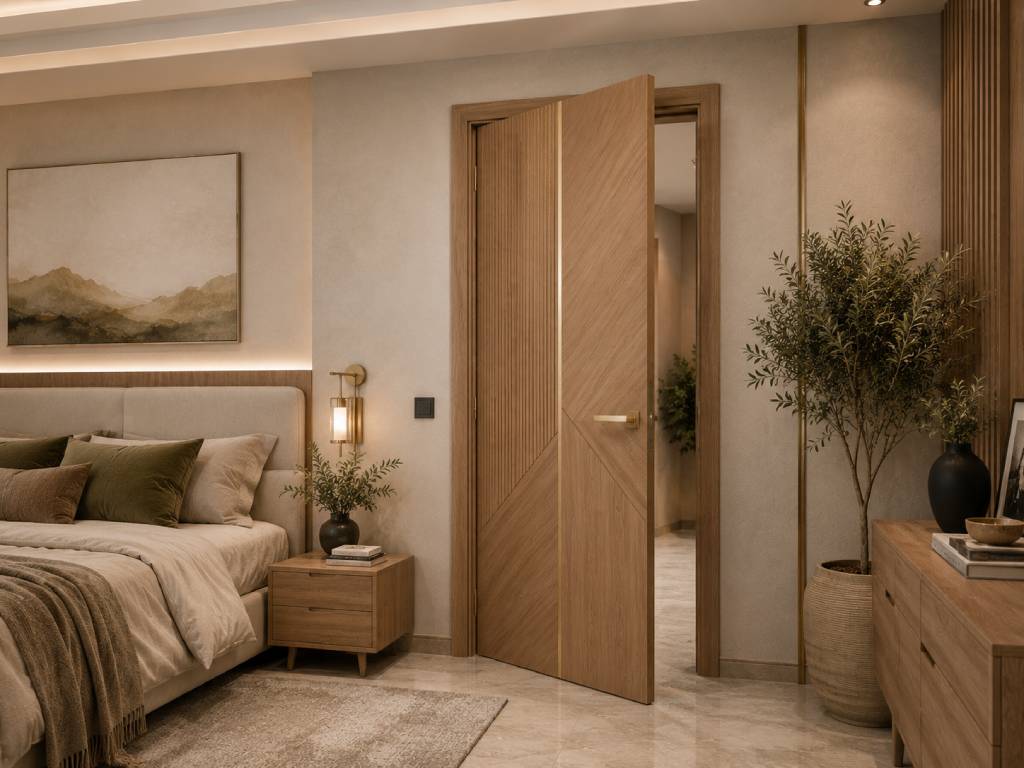
Some spaces benefit from simplicity more than statement features. A flush oak door uses clean lines and uninterrupted timber surfaces to create a calm transition between rooms. As a modern wooden door design, it blends naturally into minimalist interiors where proportion, natural materials, and subtle textures define the overall aesthetic. Its understated appearance also allows furniture and finishes to become the primary visual focus.
Unlike decorative doors, flush designs work well when repeated throughout multiple rooms, helping create continuity across the home.
Ideal for
- Bedrooms
- Guest rooms
- Home office
- Walk in wardrobe
Double Height Wooden Entrance Door
Homes with spacious entrance foyers often benefit from a wooden front door design that matches their scale.
A double height door creates a striking sense of arrival through its proportions rather than decorative detailing, allowing the natural beauty of timber to stand out.
Works Best In Reason Villas Complements expansive façades Farmhouses Enhances large entrance courts Duplex homes Creates a memorable arrival experience 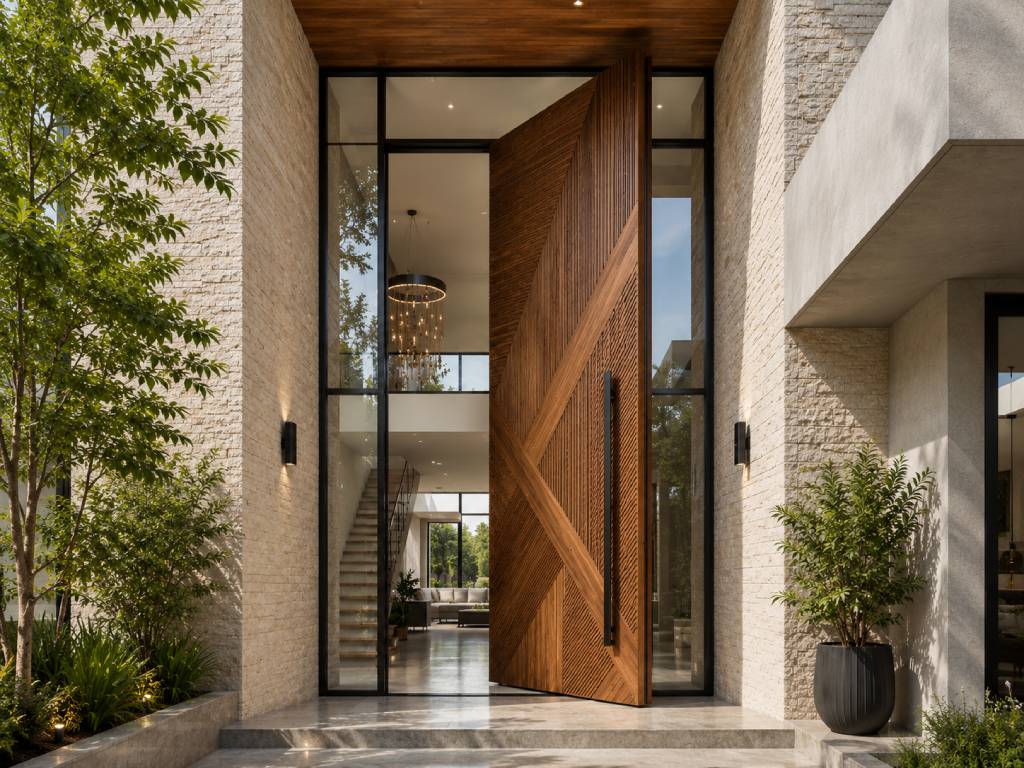
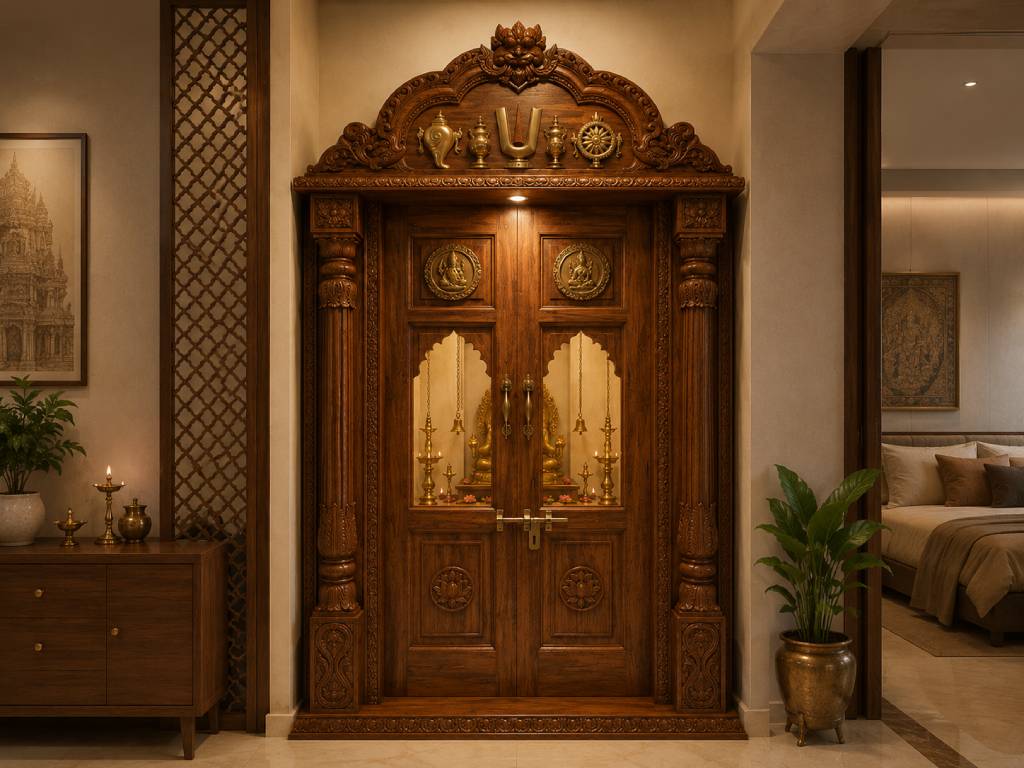
Traditional Carved Double Door
A handcrafted carved double door celebrates Indian craftsmanship through intricate patterns inspired by heritage architecture, nature, and cultural motifs. Its rich detailing adds warmth and individuality, making it suitable not only for the main entrance but also for spaces with cultural significance, such as a prayer area or courtyard.
For homeowners seeking the best wooden door design for the main entrance, this style offers enduring appeal through skilled craftsmanship. It also pairs beautifully with traditional interiors and Pooja Room Design, creating a cohesive and welcoming home
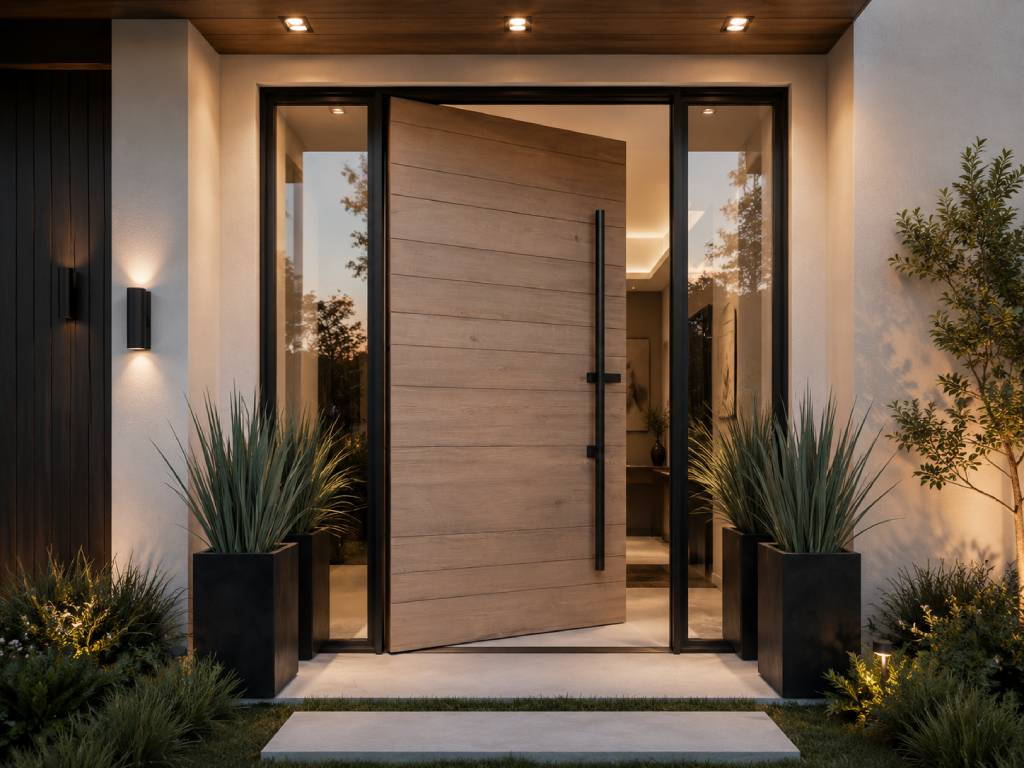
Walnut Veneer Pivot Door
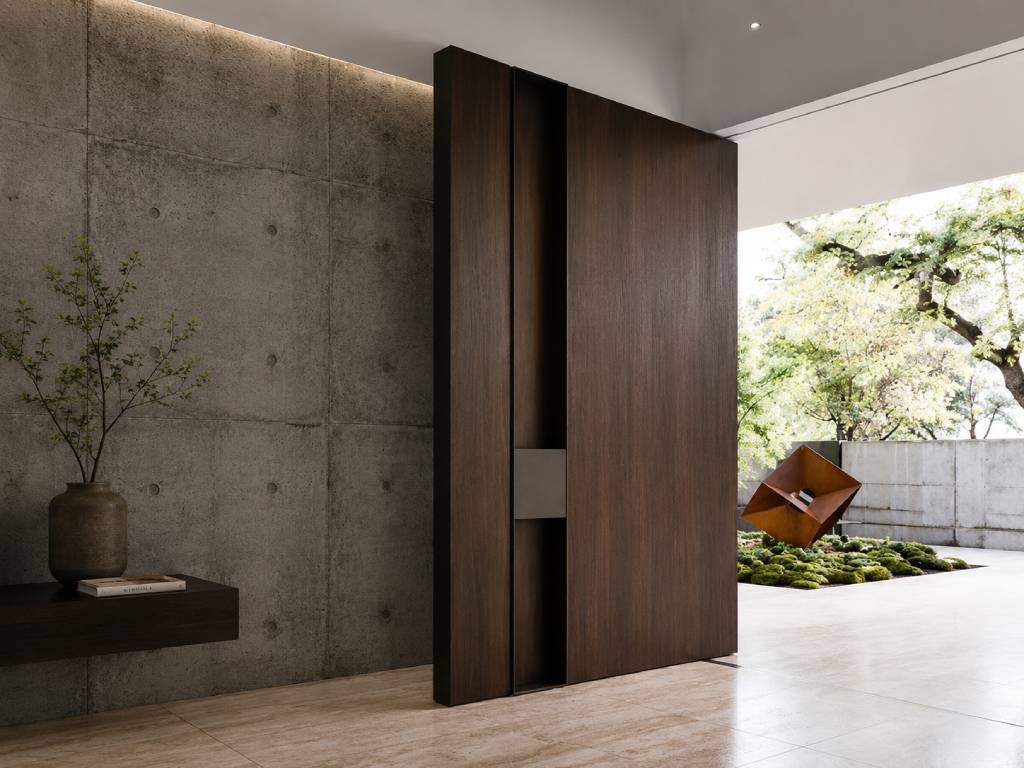
A walnut veneer pivot door offers a contemporary alternative to traditional hinged doors, making it ideal for larger openings where clean architectural lines take centre stage. The rich grain of walnut adds warmth, while the concealed pivot mechanism creates a sleek, uninterrupted appearance.
This luxury door design works equally well for grand entrances, libraries, or master suites. Pairing it with complementary wall panel design creates a cohesive architectural statement, allowing the door to integrate naturally with the surrounding space.
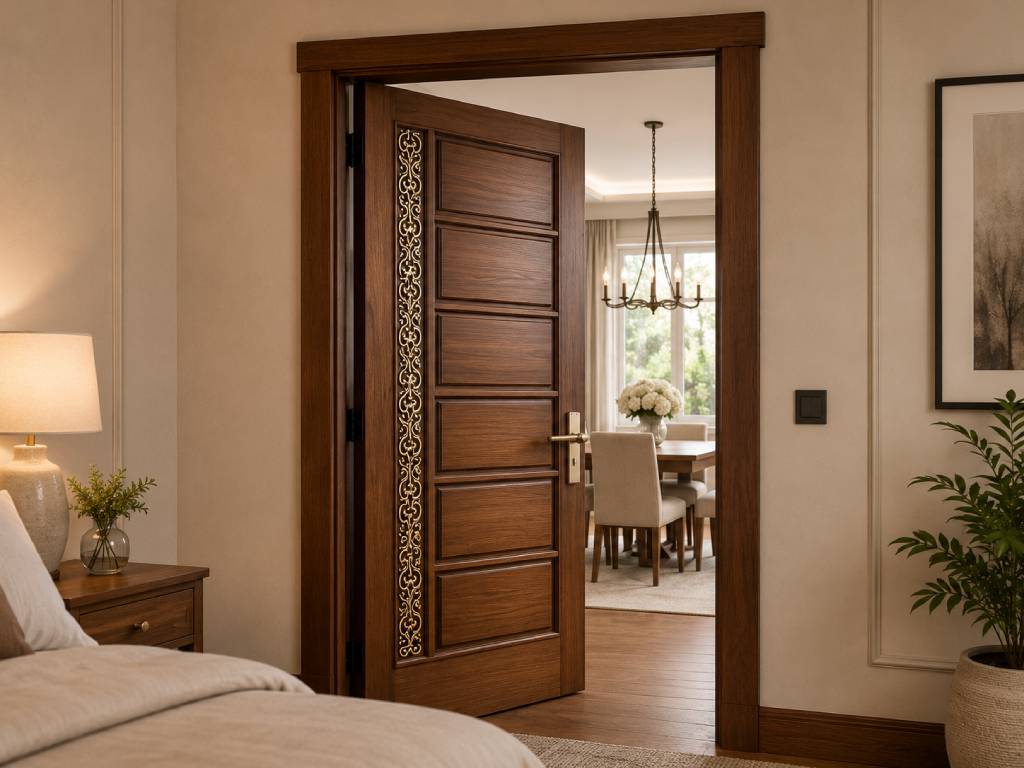
Classic Panelled Interior Door
Panelled doors have remained popular because they adapt effortlessly to both traditional and contemporary interiors. Their balanced proportions introduce subtle depth without overwhelming the room, making them a dependable choice for homeowners who want consistency throughout the house.
Instead of mixing several door styles, repeating the same panel design across bedrooms, living areas, and corridors creates a stronger visual rhythm while allowing custom made luxury furniture and finishes to become the defining design elements.
Works beautifully in
- Bedrooms
- Family lounge
- Dining room
- Study
- Guest room
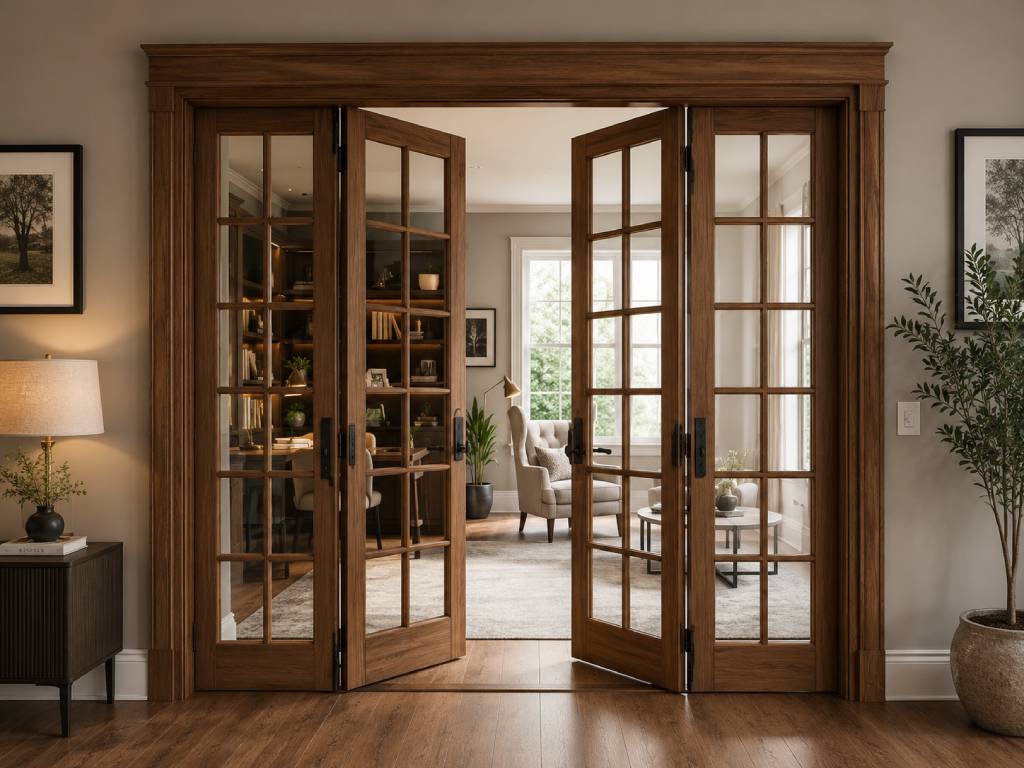
Wood and Glass Door
A combination of timber and glass creates a lighter visual presence while maintaining the warmth associated with natural wood. Depending on the level of privacy required, different glass finishes can completely change the character of the door.
Space Recommended Glass Finish Kitchen Fluted glass Home office Clear glass Balcony access Toughened clear glass Dining room Frosted glass Indoor courtyard Textured glass
Did you know? Fluted and textured glass gently diffuse light while maintaining privacy, making them particularly suitable for homes where spaces are connected without being fully open.
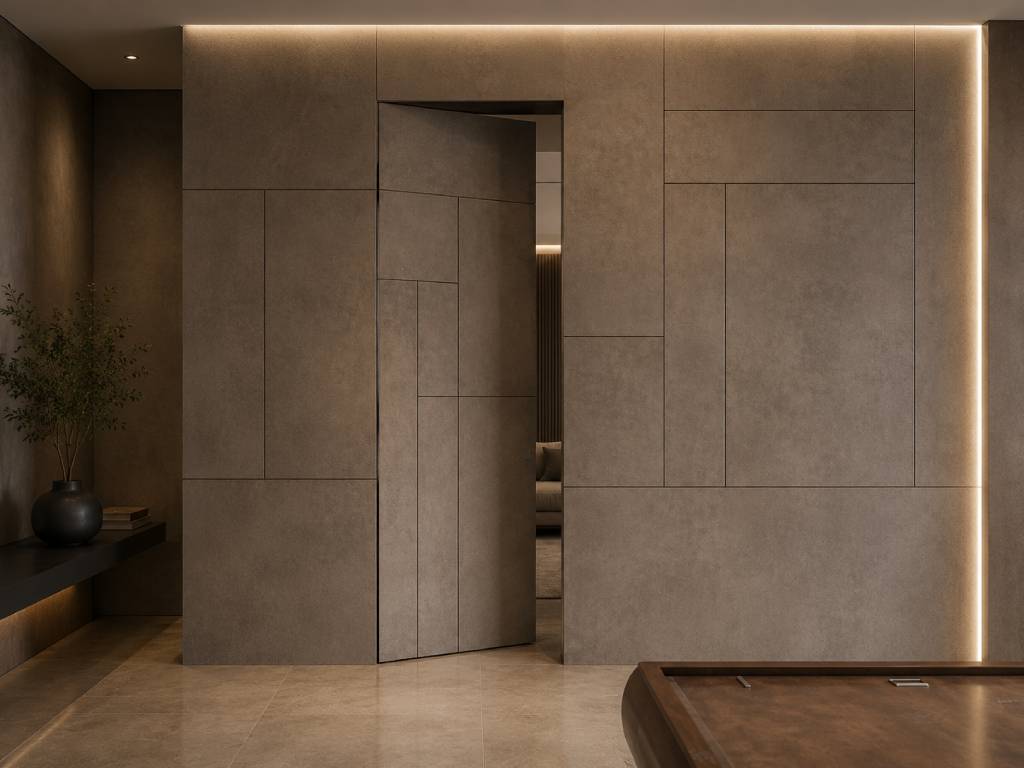
Textured Veneer Concealed Door
Concealed doors are designed to blend with the surrounding wall instead of becoming a focal point. Adding a textured veneer prevents the surface from appearing plain while preserving the clean, uninterrupted look associated with modern interiors.
This understated approach works well in homes where visual simplicity is achieved through carefully selected materials rather than decorative elements.
A practical choice for:
- Walk in wardrobes
- Utility rooms
- Home office
- Hidden storage
- Powder room
Because the door visually merges with the wall, it helps secondary spaces remain discreet without interrupting the overall design flow.
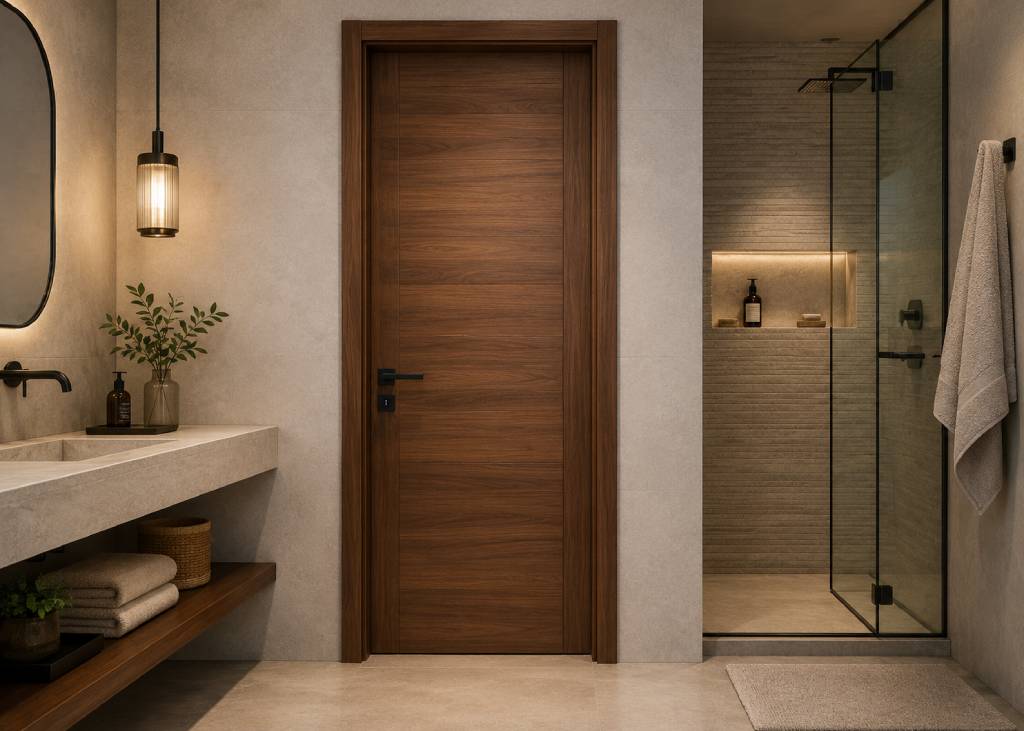
Wooden Bathroom Door with Moisture Resistant Finish
Bathroom doors should complement the home’s overall aesthetic while performing well in humid environments. Choosing a moisture resistant finish helps protect the timber from everyday exposure to steam and moisture, reducing the need for frequent refinishing.
Teak is often preferred for bathrooms because of its natural resistance to moisture, while engineered wood with high quality laminates or veneers offers a practical alternative for contemporary homes.
Factors to keep in mind:
- Choose a finish suitable for humid environments.
- Ensure proper bathroom ventilation.
- Maintain consistent door finishes across adjoining spaces.
- Select hardware with good corrosion resistance.
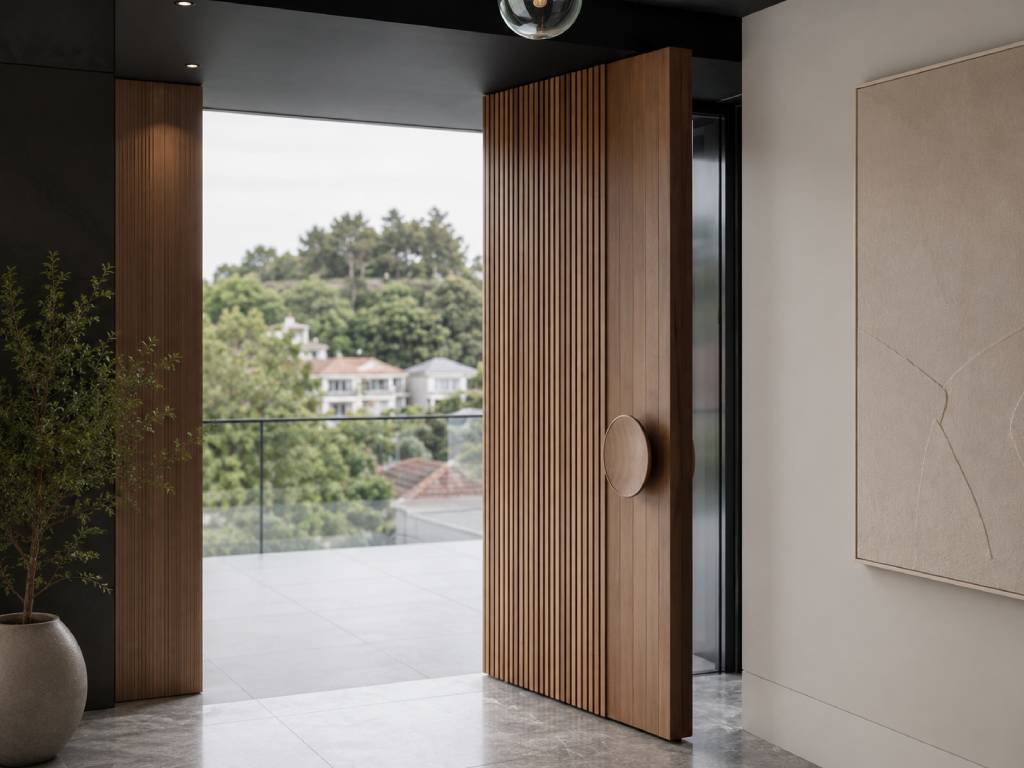
Vertical Groove Wooden Door
Vertical grooves introduce depth through shadow rather than ornamentation. The linear detailing naturally draws the eye upward, making the door appear taller while adding subtle architectural interest. This style adapts equally well as a wooden front door design or as an interior feature for contemporary homes where texture is preferred over decorative carving.
It pairs beautifully with stone finishes, large glazing panels, and neutral colour palettes, making it suitable for homes that embrace a clean and understated design language.
Choosing the right wood for your door design
The appearance of a door depends on its design, but its long term performance depends on the wood you select. Factors such as durability, grain pattern, maintenance, and climate suitability all influence how well a door ages over time.
The table below compares some of the most commonly used materials to help you identify the right option for your home or a turnkey interior solutions project.
Wood Type Appearance Durability Maintenance Best Suited For Teak Rich golden brown grain Excellent Low Main entrances, bathrooms, premium interiors Oak Straight, visible grain High Moderate Bedrooms, study, living spaces Walnut Deep brown with elegant grain High Moderate Libraries, master suites, luxury interiors Mahogany Fine reddish brown grain High Moderate Statement doors, heritage homes Engineered Wood Uniform finish Moderate to High Low Apartments, interior doors Veneer Finish Natural wood appearance over engineered core Depends on substrate Low Contemporary interiors, concealed doors
A premium wooden door is not always made from solid timber. High quality engineered cores with natural veneers provide excellent stability for interior spaces while achieving the same refined appearance.
Luxury door hardware and finishing details
The right hardware and finish complete a wooden door design, improving both its appearance and everyday performance.
Door Hardware
- Handles: Pull handles suit main doors, while lever handles work well for interiors.
- Hinges: Concealed hinges create a modern look, whereas visible hinges complement traditional doors.
- Locks: Smart locks add convenience, while mortise locks remain a dependable choice.
- Metal Finish: Match brass, black, or stainless steel finishes with other fixtures for a cohesive look.
Door Finishes
- Matte Finish: Highlights the wood’s natural grain.
- PU Coating: Protects against scratches, moisture, and daily wear.
- Wood Stains: Enhance colour while preserving the timber’s texture.
- Protective Sealers: Improve durability, especially for doors exposed to humidity.
Common mistakes to avoid when choosing wooden doors
Even an attractive design may not perform well if it is selected without considering the space, climate, or overall architecture, a detail every residential interior designer evaluates early in the planning process.
Avoiding these common mistakes can help you make a better long term investment.
Selecting the Same Door for Every Room
Different rooms have different privacy, maintenance, and functional requirements. A bathroom door should respond to humidity, while a study may benefit from partial glazing. Matching every room with the same design can reduce both practicality and visual interest.
Ignoring Scale and Proportion
A large carved entrance can overwhelm a compact façade, while a narrow flush door may appear insignificant in a spacious foyer. Door dimensions should always relate to the proportions of the surrounding architecture.
Prioritising Trends Over Longevity
Popular finishes and decorative details may lose their appeal over time. Natural timber, balanced proportions, and restrained detailing generally adapt better to evolving interior styles.
Overlooking Hardware Quality
Premium timber deserves hardware that performs equally well. Hinges, locks, handles, and protective finishes influence the door’s durability just as much as the wood itself.
FAQs
Choose a wooden door based on the room’s function and privacy needs. Statement designs suit entrances, while flush, panelled, or moisture resistant doors work better for interior and utility spaces.
Regular cleaning and timely refinishing help maintain wooden doors. Dust frequently, wipe with a damp cloth when needed, and refresh protective finishes every few years based on usage and exposure.
A well maintained wooden door can last for decades. Solid wood doors typically last 30 to 50 years, while quality engineered wood doors generally perform well for 15 to 25 years.
Yes, teak is among the best choices for a main entrance door. Its natural durability, moisture resistance, and ability to withstand changing weather conditions make it ideal for Indian homes.
Minimal and material focused designs are leading wooden door trends in 2026. Concealed doors, pivot doors, vertical grooves, natural timber finishes, and subtle brass detailing remain popular choices.
Solid wood doors are made entirely from natural timber, while engineered wood doors have a manufactured core with a wood finish. Solid wood suits premium entrances, whereas engineered wood works well for interior spaces.
Consider the room, wood type, finish, hardware, and climate before selecting a wooden door. These factors influence durability, appearance, maintenance, and how well the door suits the space.
Teak is the best wood for a main door in India. Its natural resistance to moisture, termites, and warping makes it suitable for most climates while offering excellent durability and long lasting visual appeal.
The best wooden door design for luxury homes depends on the architecture. Pivot doors, teak entrance doors with brass accents, and concealed veneer doors are popular choices for premium residences.