A dressing table is often used during one of the busiest parts of the day and expected to hold an entire routine. It needs space for daily essentials, flattering light, a comfortable seat and enough surface area to keep everything within reach without making the bedroom feel crowded. A considered dressing table design brings these needs together while also connecting visually with the bed, wardrobe and surrounding finishes.
This guide explores how to choose the right form, storage and mirror for different bedroom styles and sizes. It also looks at space-saving layouts, integrated dressing units and the details that give a stylish dressing table design a more refined and personal character.
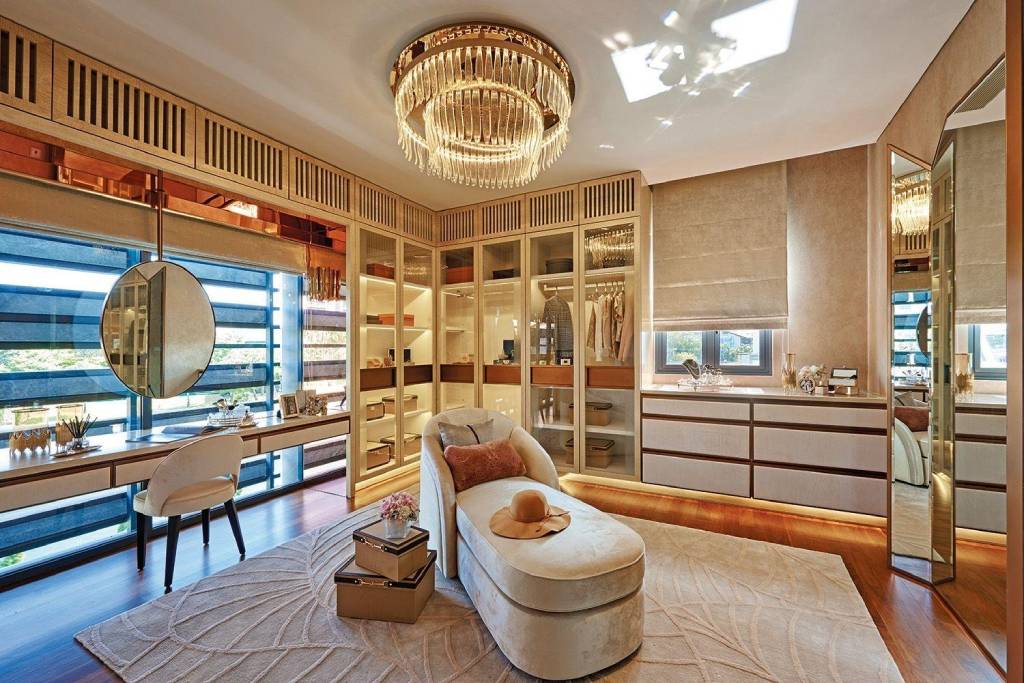
How to Choose the Right Dressing Table Design for Your Bedroom
The right dressing table design for bedroom interiors begins with how the room is used. A quick morning routine may need an uncluttered surface, two organised drawers and bright task lighting. A longer grooming routine may call for deeper storage, accessible plug points and both close-up and full-length viewing.
Working with a Residential interior designer can also help optimize the layout, circulation and storage, especially when planning dressing areas within compact or luxury bedrooms.
Check the available wall and circulation around it. The stool should pull out without obstructing wardrobe shutters, a balcony door or the passage to the bathroom. A shallow floating unit suits compact rooms, while a larger suite may allow a dedicated dressing wall between the wardrobe and bathroom.
Finishes should relate to the bedroom. wood can repeat the wardrobe veneer, stone can echo a bedside table and metal can pick up the lighting. For homeowners asking what is the best dressing table design for modern bedrooms, the answer is one planned around routine, proportion and storage, then refined through materials.
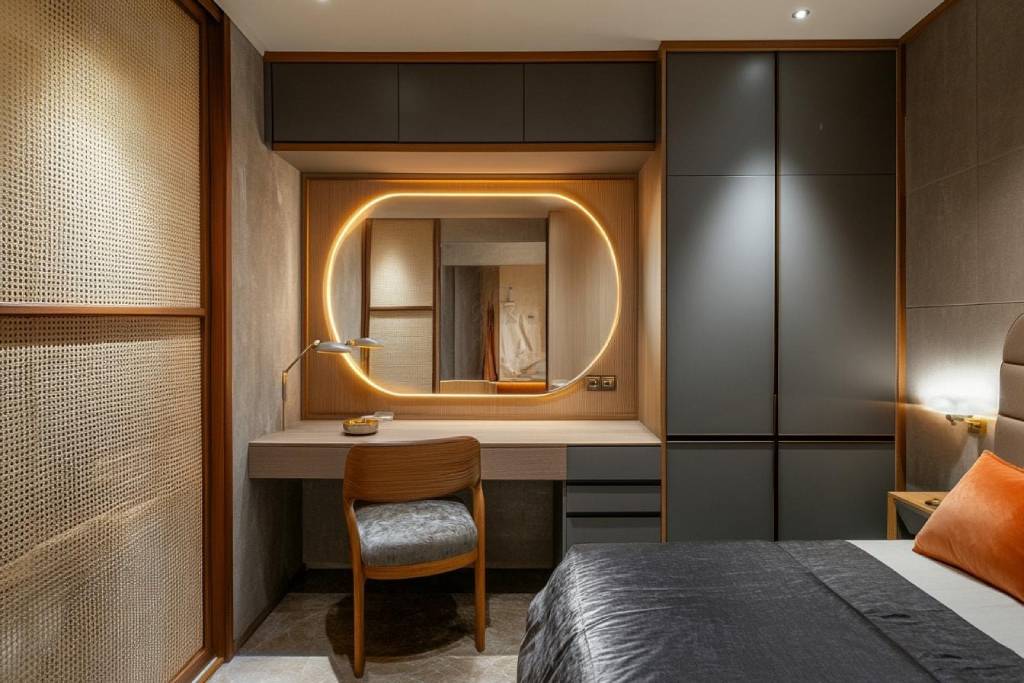
Dressing Table Designs for Different Bedroom Styles
The most suitable dressing table design depends on the room’s broader design language. Shape, material and visual weight should feel connected to the bed, wardrobe and lighting while still giving the dressing area its own identity. These dressing table design ideas for contemporary homes show how the same function can be expressed in distinctly different ways.
Contemporary Bedrooms
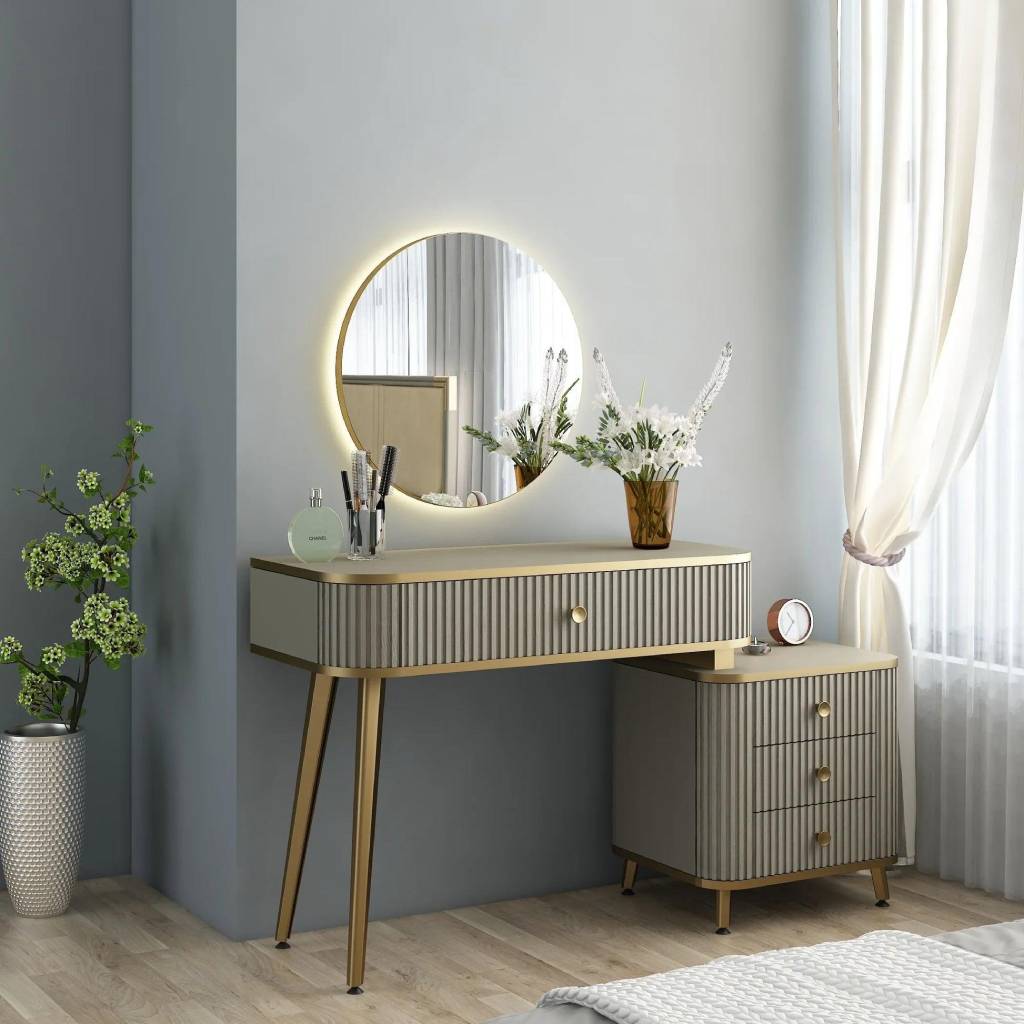
In a contemporary bedroom, the dressing table usually works best when its form is simple and the surfaces are easy to live with. A slim console with handleless drawers, a framed mirror and a compact upholstered stool keeps the composition crisp. Veneer, lacquer, fluted glass, wooden door designs and brushed metal can add depth in controlled amounts when coordinated across the bedroom..
A stylish dressing table design may align its drawers with the wardrobe shutters or repeat another line from the room in the mirror frame. Integrated plug points and organisers keep appliances and cosmetics concealed once the routine is complete.
Minimalist Bedrooms
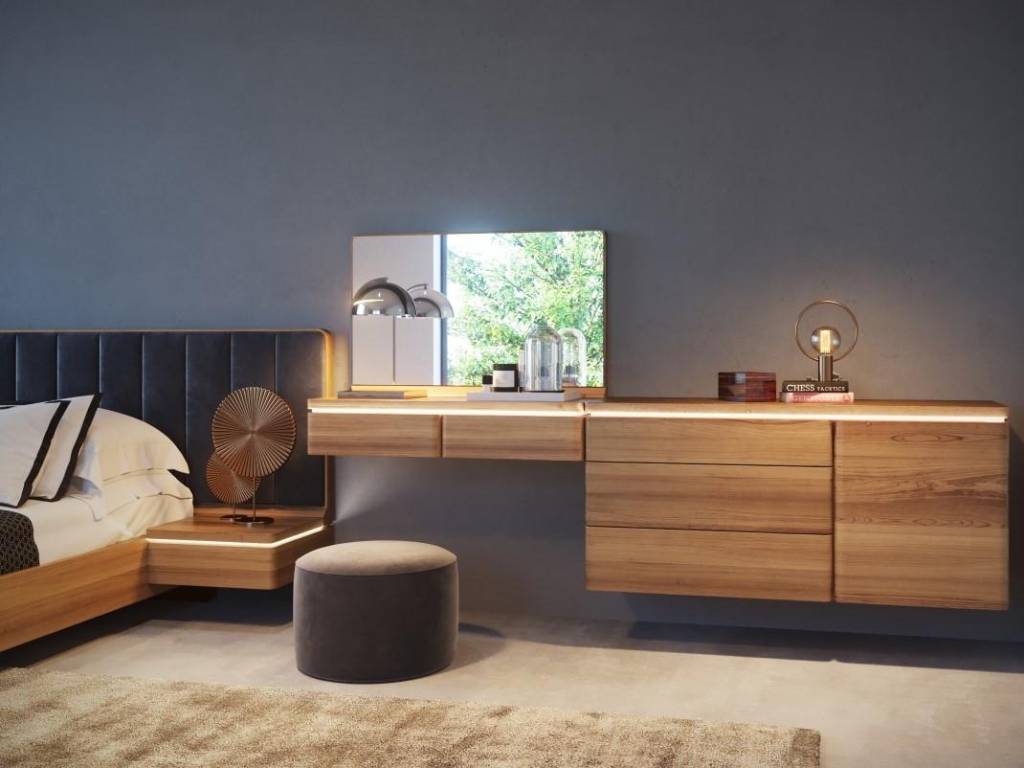
In a minimalist bedroom, the dressing table needs to support the daily routine without becoming another dominant piece of furniture. Floating drawers, a thin-edged mirror and a stool that tucks beneath the surface work well. Concealed storage keeps the top clear.
A pared-back dressing table design can match the wall for a quieter effect or use light wood for contrast. It still needs enough depth for comfortable use and drawers planned around what will actually be stored. Minimal form depends on precise internal planning.
Luxury Master Bedrooms
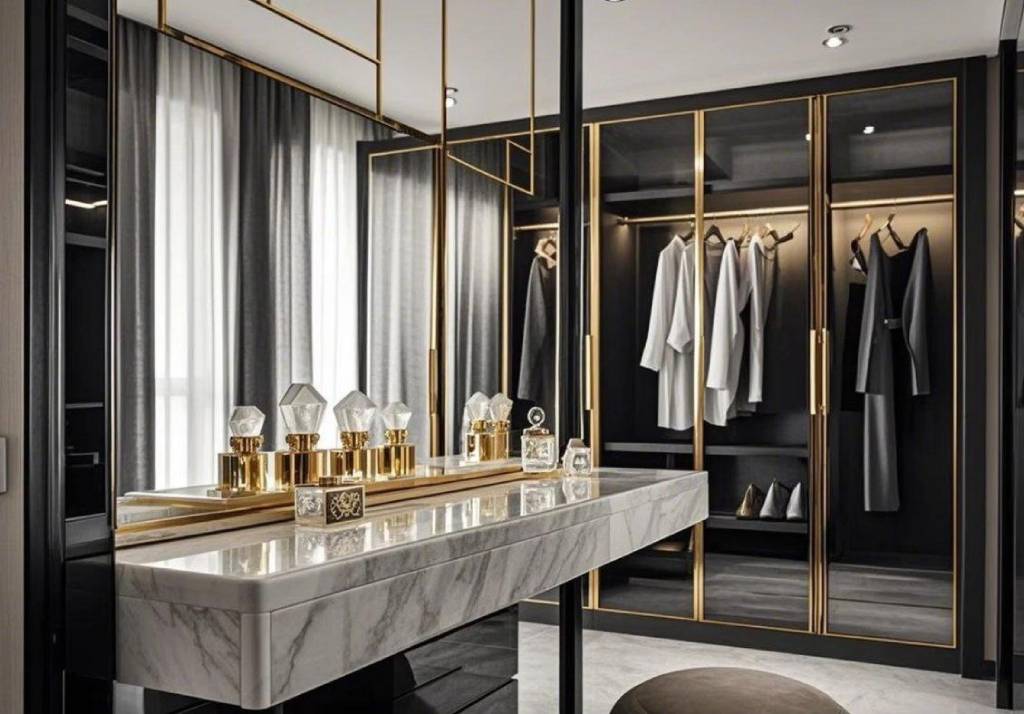
A master suite allows the dressing area to become more substantial. A luxury modern dressing table may use a natural stone top, crafted wood, leather-lined drawers and integrated lighting, with dedicated storage for jewellery, watches, fragrances and grooming tools.
A custom wooden dressing table design becomes even more effective as part of custom interior design, coordinating with the wardrobe and bed while introducing a distinctive edge, curved front or metal inlay. It may also sit within a walk-in wardrobe or between the bedroom and bathroom to create a more private getting-ready zone.
Dressing Table Designs That Maximise Space and Storage
Good storage is rarely about adding the maximum number of drawers. It is about giving frequently used items the right depth, visibility and access. A well-planned dressing table design considers the size of appliances, the height of bottles, jewellery organisation and where cables will sit. It also makes sure the dressing area does not compete with the wardrobe or reduce comfortable movement around the bed.
Wall-Mounted Dressing Tables
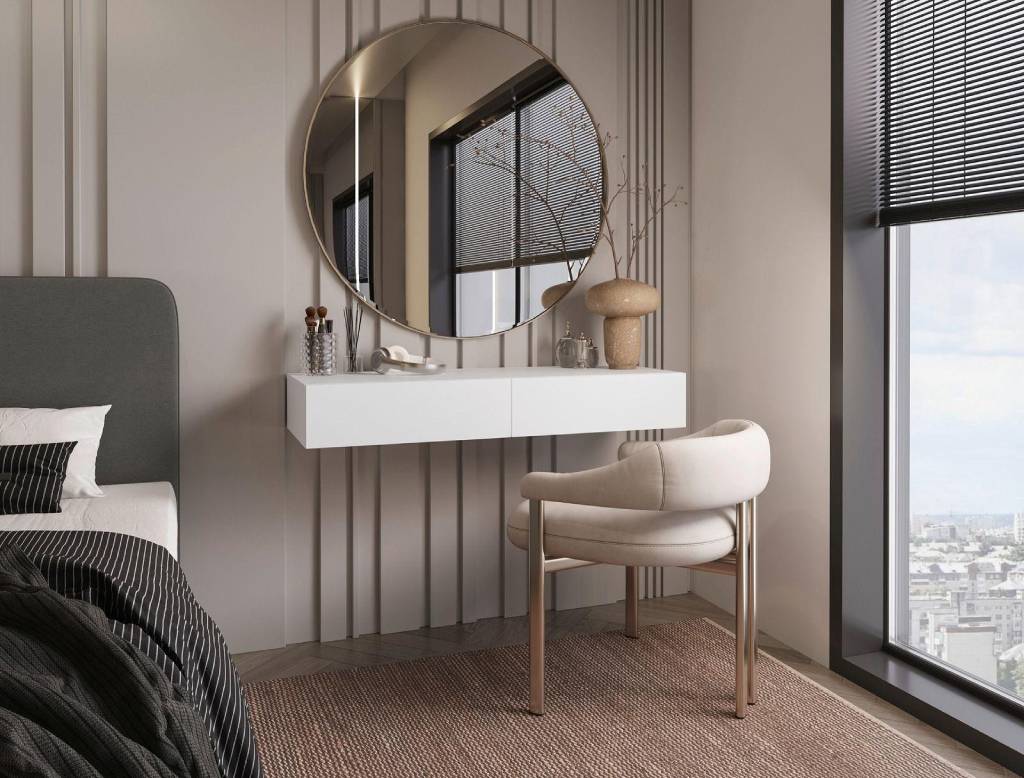
A floating unit keeps the floor clear and gives compact rooms a lighter appearance. A wall-mounted dressing table design for small spaces works well beside the wardrobe, near a window or along the passage to an attached bathroom. Its height should be coordinated with the stool and mirror.
Without legs, cleaning is easier and the stool can tuck away fully. A shallow drawer with dividers can still hold daily essentials. When choosing a dressing table design for bedroom interiors with limited space, a floating unit gives the routine a dedicated place without making the room feel overfilled.
Dressing Tables with Built-In Storage
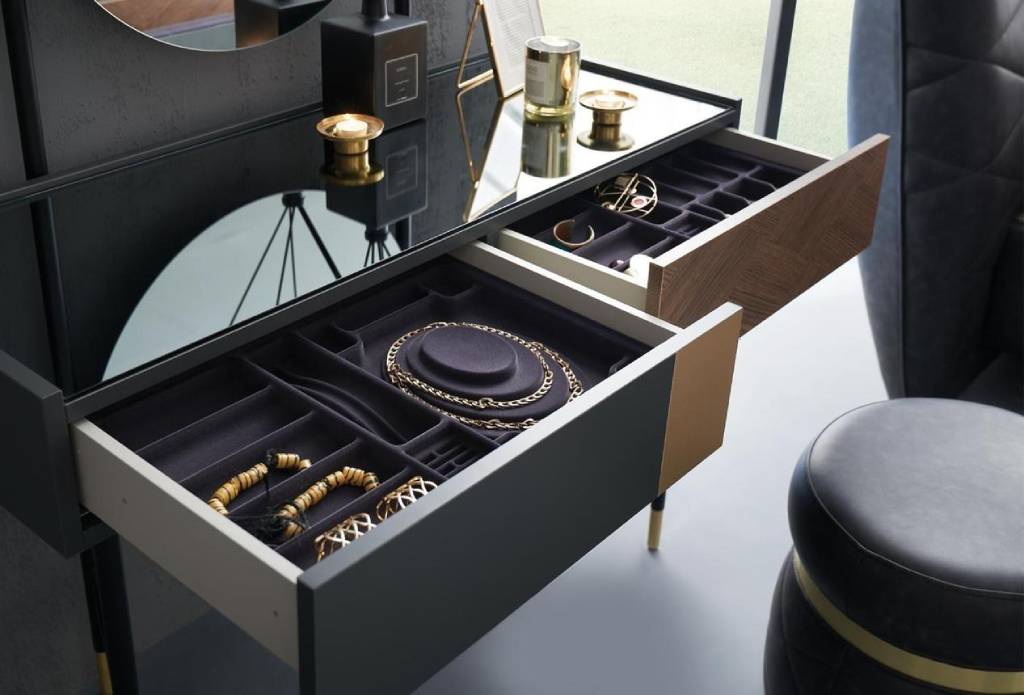
The most useful built-in storage is planned around what the homeowner reaches for each day. Slim, lined compartments keep jewellery visible while deeper drawers give hair tools, skincare and backup products their own place. Heat-resistant inserts, cable openings and a nearby plug point improve everyday use.
A dressing table design with mirror and storage solutions may include a lift-up compartment or slim cabinets behind the mirror. Daily items should remain easy to reach, with occasional pieces stored further inside. This is where a refined stylish dressing table design becomes genuinely useful.
Dressing Units with Wardrobes
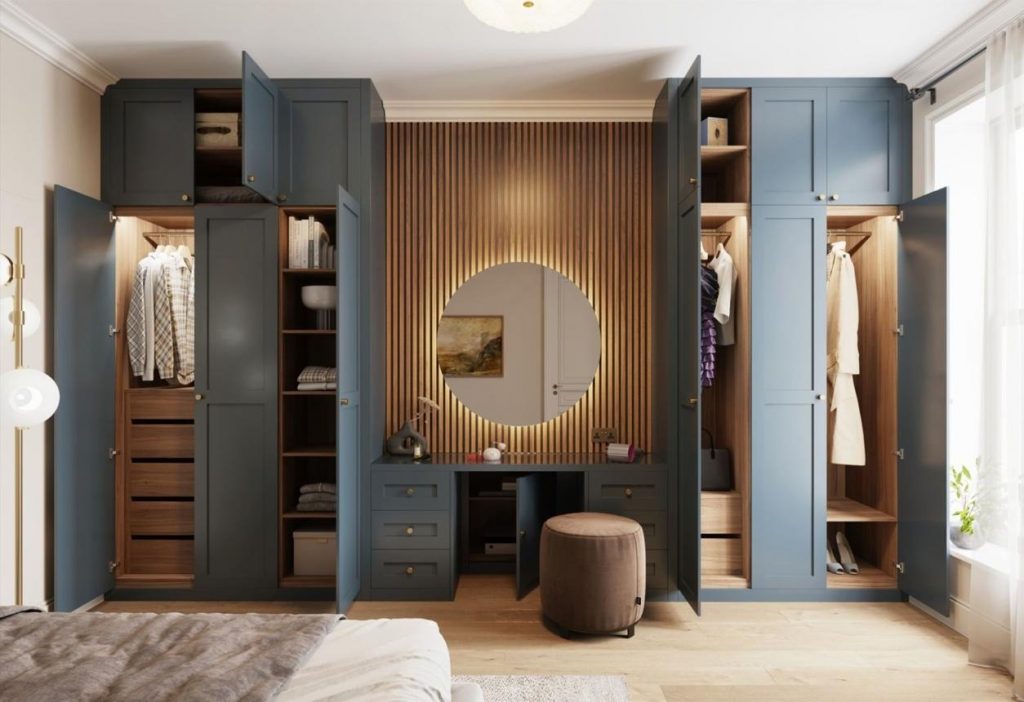
This integrated approach also enhances the overall home interior experience, making the bedroom feel more organised, seamless and comfortable to use every day. A thoughtful dressing unit design may place drawers and a mirror between wardrobe sections or extend the same finish across the dressing area.
This works in apartments where each wall must do more and in larger homes where the wardrobe and dressing area form one composition. When the only available position is beside the bed, a bed dressing table design can use a slim extension of the bedside unit. In a guest room, a compact bed dressing table design can combine bedside storage with a small grooming surface.
Mirror Designs That Complete a Dressing Table
The mirror affects how the dressing area works, how much light it reflects and how prominent the unit feels within the room. A successful mirror dressing table design considers the user’s seated height, the direction of natural light and whether the mirror is intended for close grooming, complete outfit checks or both.
Full-Length Mirrors
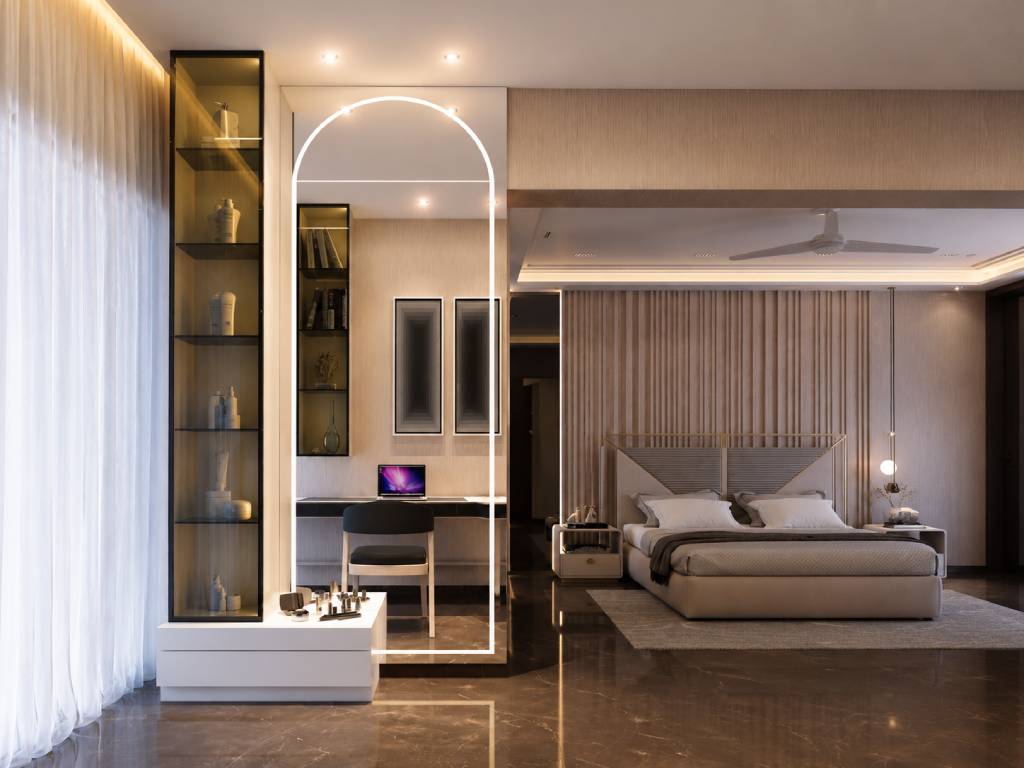
A full-length mirror is useful in master bedrooms, walk-in wardrobes and dressing passages. It also reflects more of the room, which can help a narrow dressing area feel less enclosed. A dressing table design with full-length mirror can position the console alongside the glass or use drawers beneath one section, allowing the same area to work for seated grooming and complete outfit checks.
For homeowners planning a dressing table design for bedroom suite, a floor-to-ceiling mirror can make the dressing wall feel more expansive. It should be positioned where the user can stand comfortably, without direct glare or an exposed view from the doorway.
Round and Statement Mirrors
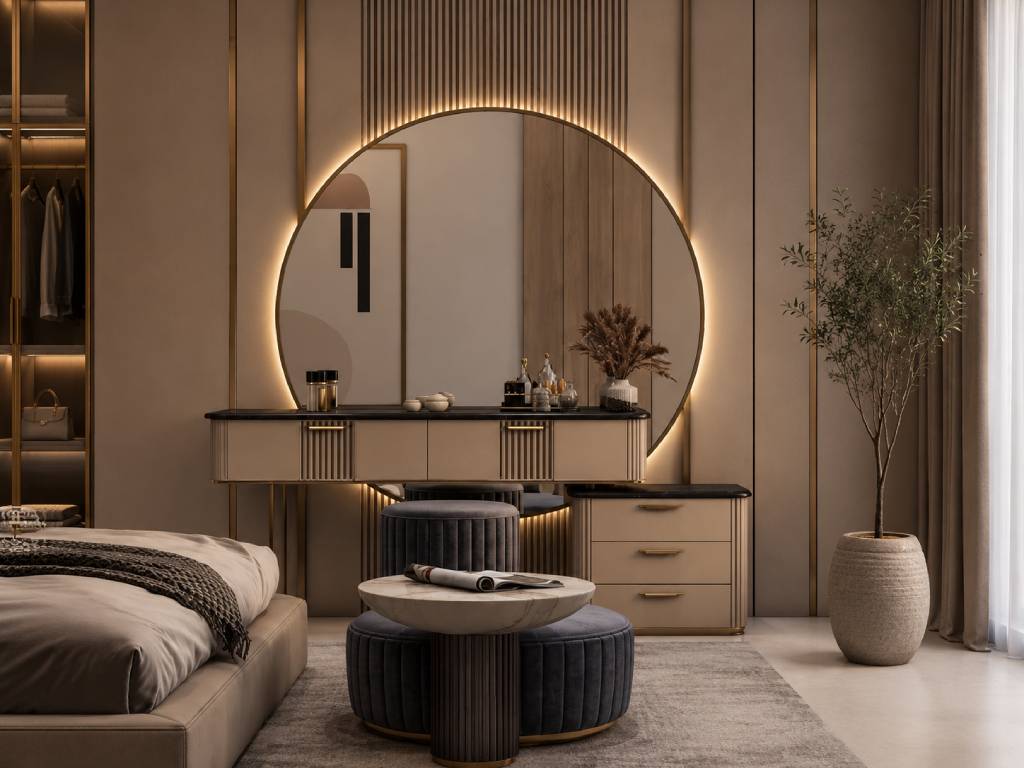
A round mirror can break up the straight lines created by wardrobes, drawer fronts and upholstered beds. They work well above compact consoles, while oval, arched and irregular forms offer a similar effect when correctly scaled.
A statement mirror still needs a practical viewing area. Its centre should align with the seated user and the frame should not reduce surface space. In a wooden dressing table design, a slim metal or upholstered frame can introduce contrast without distracting from the grain.
Backlit Mirror Designs
Backlit mirrors provide even illumination and give the dressing area a more finished architectural quality. They are useful where daylight is limited or the unit sits away from a window. Warm or neutral light usually feels more comfortable in a bedroom.
A well-resolved backlit dressing table design should conceal drivers, wiring and switches within the joinery or wall. The mirror light should also coordinate with the room’s general lighting.
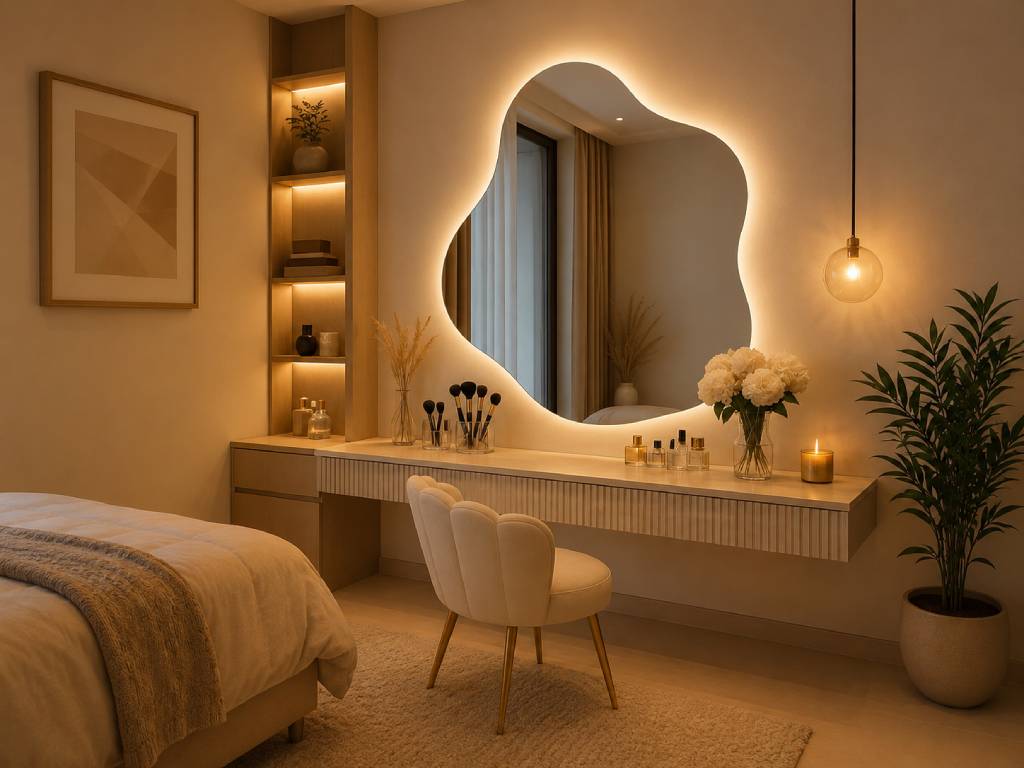
Luxury Details That Transform a Dressing Table
The latest dressing table design trends for luxury interiors favour details that feel integrated rather than added at the end. Material transitions, drawer interiors, lighting and hardware all influence how the unit looks and feels in use. A few considered choices can give a simple form greater depth:
- Natural stone tops: Marble, quartzite or another selected stone introduces movement and a cool tactile surface. Its thickness, edge detail and support need to be decided together so the top feels properly resolved.
- Fluted or curved fronts: Gentle curves or fluting bring shadow and texture to the drawers, giving the unit character without making it feel overworked.
- Leather detailing: Leather on the handles, inside the drawers or behind the mirror introduces warmth in places the homeowner sees and touches every day.
- Metal accents: Brushed brass, bronze or dark metal can pick out the legs, edges or handles, especially when the same finish appears elsewhere in the bedroom.
- Custom hardware: A recessed grip or specially made pull can give the unit a distinctive finish while still feeling natural in the hand.
- Integrated lighting: Mirror lighting, illuminated drawers and a focused pendant can improve visibility while creating a calm evening setting.
- Personalised storage: Compartments planned around jewellery, watches, grooming tools and products reduce clutter and make the routine easier.
At Design First, every dressing table is planned as part of end-to-end home interiors, where wardrobe planning, furniture proportions, lighting positions and material coordination are considered together. This allows the unit to connect with the homeowner’s habits and the room as a whole.
FAQs
Yes. They free the floor, allow the stool to tuck away and make compact bedrooms feel less crowded. Height, drawer depth and mirror position should be planned together.
Use shallow organisers for jewellery and cosmetics, deeper drawers for tools and concealed cabinets for occasional items. Each compartment should be sized around what it will hold.
Measure the wall, check clearance for the stool and wardrobe shutters and list what must be stored. Choose a dressing table design and finish that coordinate with the bedroom without restricting movement.
For luxury homes, recent designs are leaning towards finely crafted wood, natural stone, fluted fronts, leather-lined drawers and lighting built into the mirror or joinery. The strongest examples feel generous in detail while remaining practical for everyday use.
A modern dressing table design should include legroom, accessible drawers, a correctly positioned mirror, suitable lighting, plug points and concealed cable management.
The best option combines a clean form with storage planned around the routine. A floating or slim console with concealed drawers, a well-sized mirror and integrated lighting suits many modern bedrooms.
The right mirror depends on how the dressing table is used. A round mirror works neatly above a compact console, backlighting helps with close grooming and a full-length mirror is useful when the area also serves for outfit checks.