A dining table has to cope with daily breakfasts, family dinners, celebratory meals and evenings when visitors linger long after a meal is over. The way individuals sit, move and share time together comfortably is determined by the shape, size and placement. Custom interior design brings these considerations together, giving the dining table the right relationship with the space around it.
The correct dining table brings a feeling of balance and purpose into the area. A residential interior designer considers how its size affects movement, how well the dining area flows with the spaces next to it, and the overall feel of the room, whether it’s for a family meal or a larger get-together. From the material and finish to the circulation and appropriate height for dining room table planning, each decision contributes to a space that seems welcoming, well thought out and connected to the rest of the house.
Designing a Dining Space That Brings People Together
A dining table should be chosen around the people who will use it and the way the room functions. A family that eats together every night may want plenty of seating and surfaces that are easy to wipe clean, while a pair that frequently has guests may need an extendable table and space to serve food.
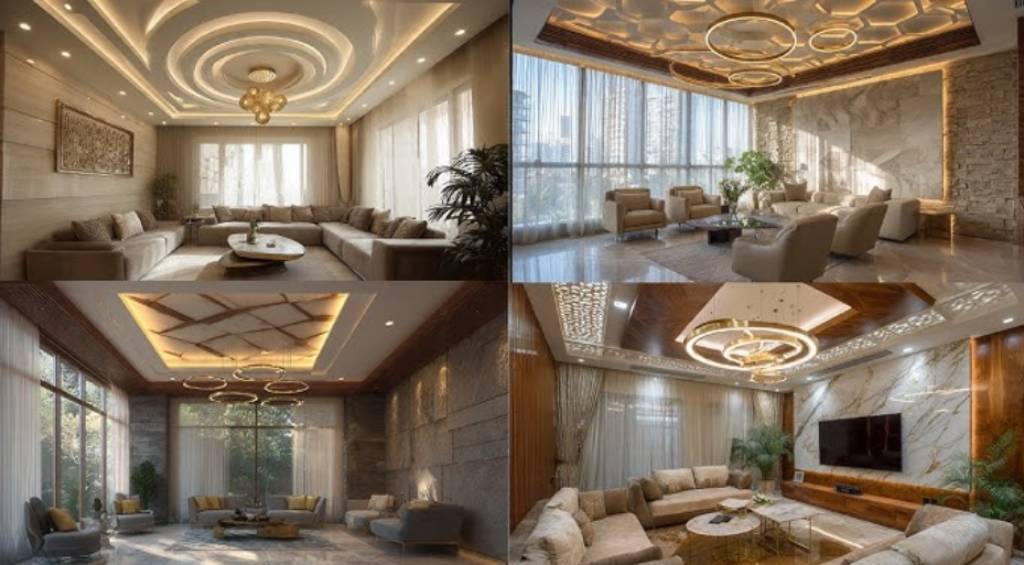
Start with the available floor area and leave enough space around the table for chairs to be pulled out comfortably. In most homes, a clear passage of about 90 cm works well, though wider circulation may be preferable near a kitchen, balcony door or buffet unit. Together, these considerations shape the home interior experience, with lighting, storage and access to the kitchen all contributing to how the space is used. Thoughtful POP design for hall spaces, for instance, can help define zones, integrate lighting and add architectural character without overwhelming the room.
The latest dining room table designs for Indian homes increasingly reflect mixed routines. A table may support family meals, homework, celebrations and occasional work-from-home needs, so the proportions and durability matter as much as appearance.
Dining Table Designs Based on Shape and Seating
How the table is shaped and how many it can seat determines how it sits in the room. A round table will make discourse feel more inclusive, whereas a rectangular one helps to manage a longer space and can accommodate more visitors. The proper option depends on room dimensions, circulation and frequency of use to full capacity.
Round Dining Tables
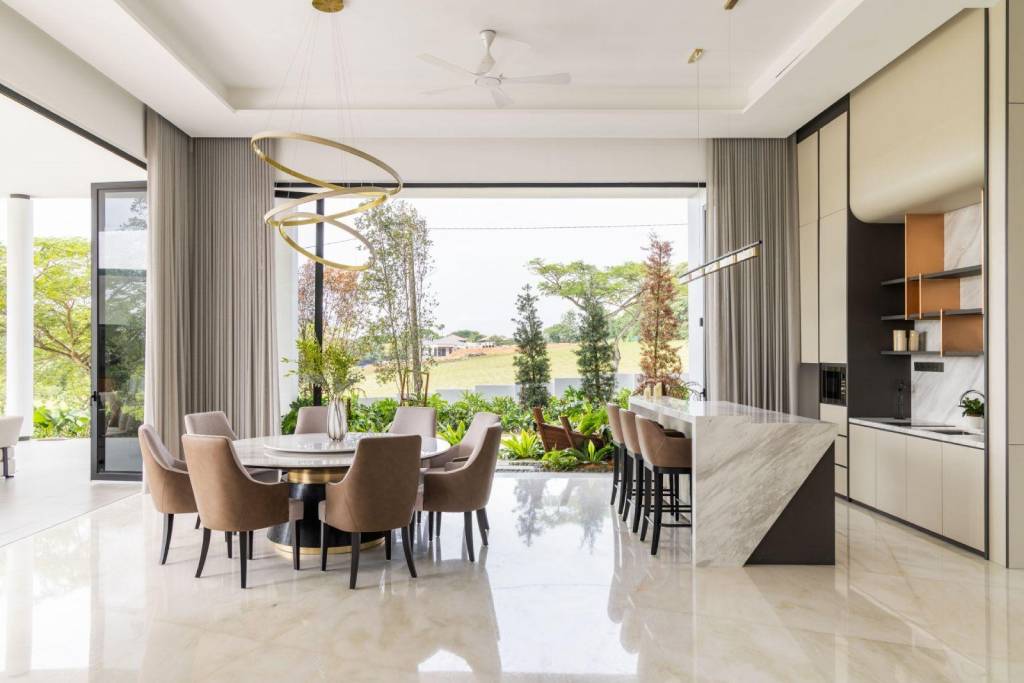
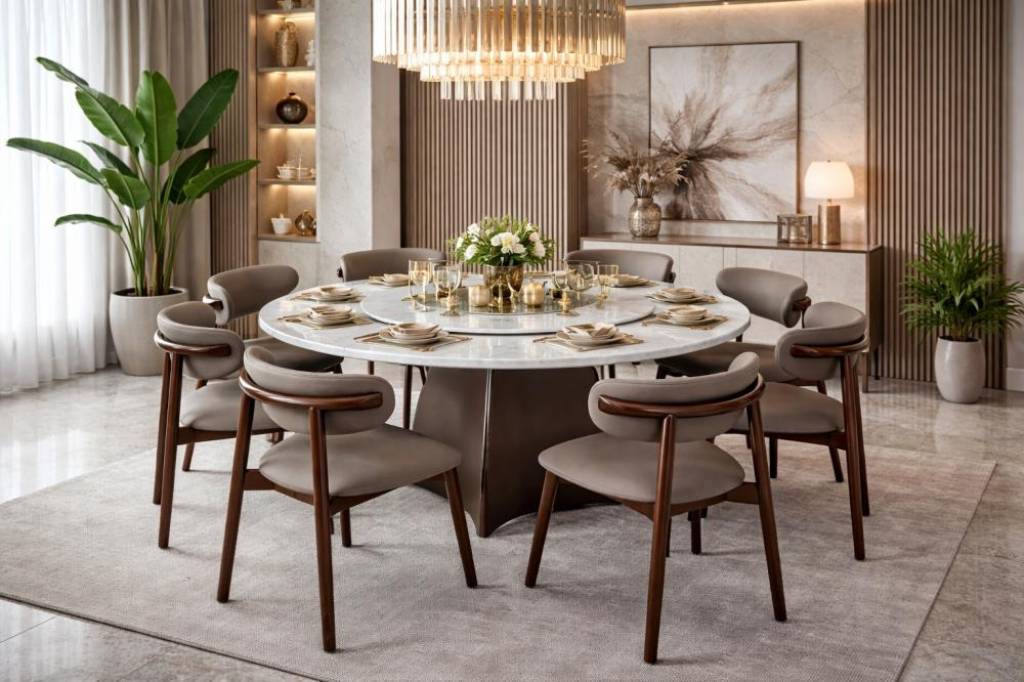
Round dining room table designs for dining areas work well in square rooms, breakfast corners and compact homes. Their curved form improves movement around the table, removes sharp corners from circulation paths and gives every diner a clearer view of the others, encouraging more natural conversation.
A pedestal base can offer more legroom because there are no corner legs to navigate. A diameter of around 100 to 120 cm is generally comfortable for four people. Larger round tables need careful planning, as the centre may become difficult to reach. A Lazy Susan or low centrepiece can make serving easier without interrupting sightlines.
In contemporary interiors, round tables can soften the straight lines of cabinetry, wall panelling and rectangular layouts. Natural wood, stone or a -and-metal combination pairs well with curved chairs and circular pendant lighting, creating a balanced and cohesive composition.
Rectangular Dining Tables
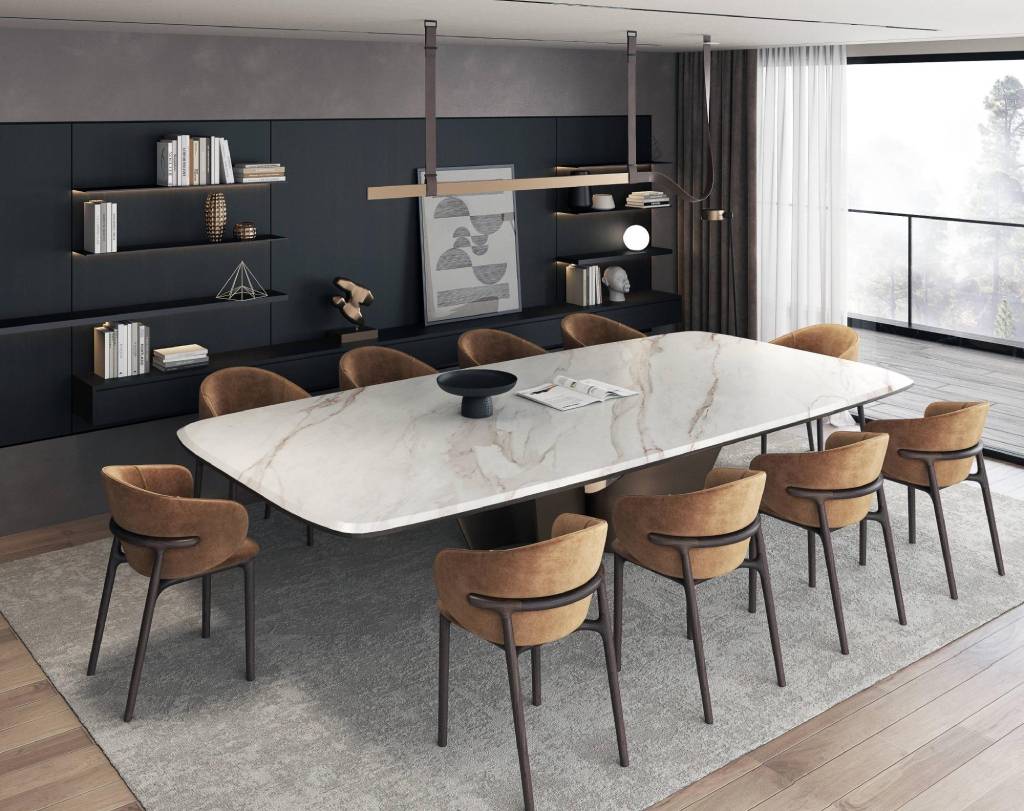
Rectangular dining room table designs for long rooms take use of elongated layouts and open-plan living areas. They provide fixed seating places, a large surface space and versatility for both daily meals and formal events.
A rectangular table can be placed parallel to a kitchen island, window or feature wall for a visually ordered space. The center base and slim legs make the chair lighter and easier to place. In larger homes, the table can also anchor the dining zone within a combined living and dining area.
Aligning the table length with ceiling details, flooring patterns or wall panelling can give the room a stronger sense of order. A considered main hall fall ceiling design can reinforce this alignment, using proportion, lighting and linear elements to complement the dining area and maintain a sense of visual balance.
Six-Seater Dining Tables
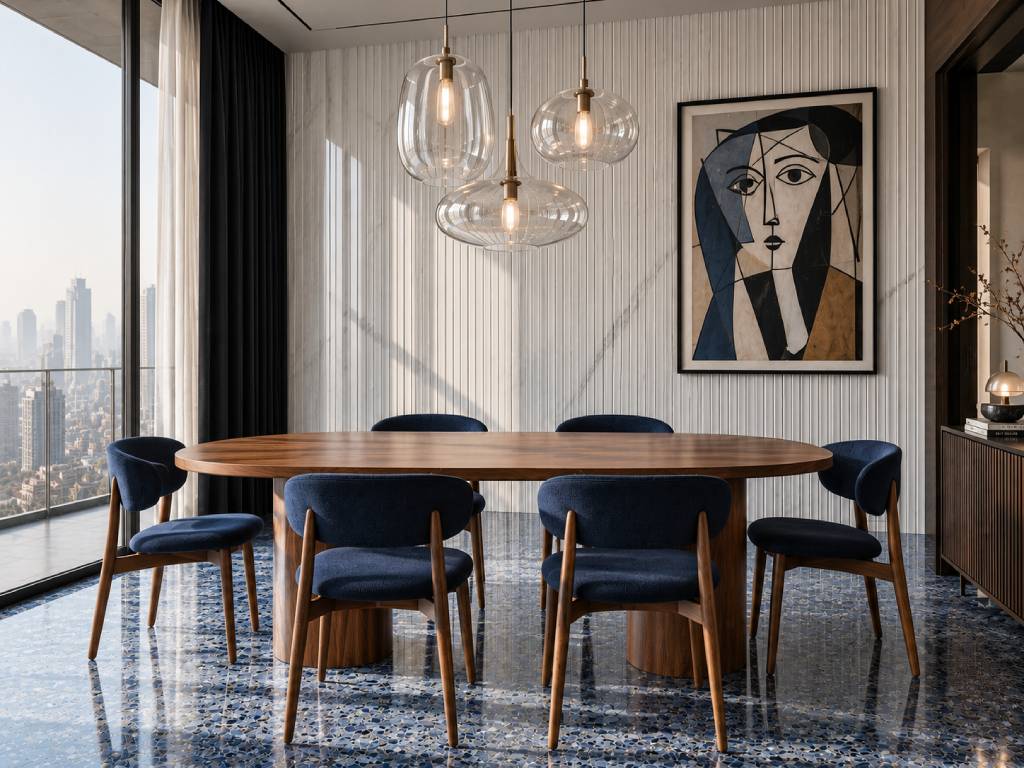
Six-seater dining room table designs for families suit many medium-sized Indian homes because they offer enough room for daily use and occasional guests. A rectangular table of roughly 160 to 180 cm in length is usually comfortable, depending on chair width and the base design.
Before finalising the table, check how far the chairs extend when occupied. The distance between the tabletop and a nearby wall, console or circulation path should allow someone to pass comfortably. An extendable design can be useful when the household entertains occasionally but does not need a larger table every day.
A well-proportioned wooden dining table design works particularly well at this size because the material brings warmth without making the table feel visually heavy.
Eight-Seater Dining Tables
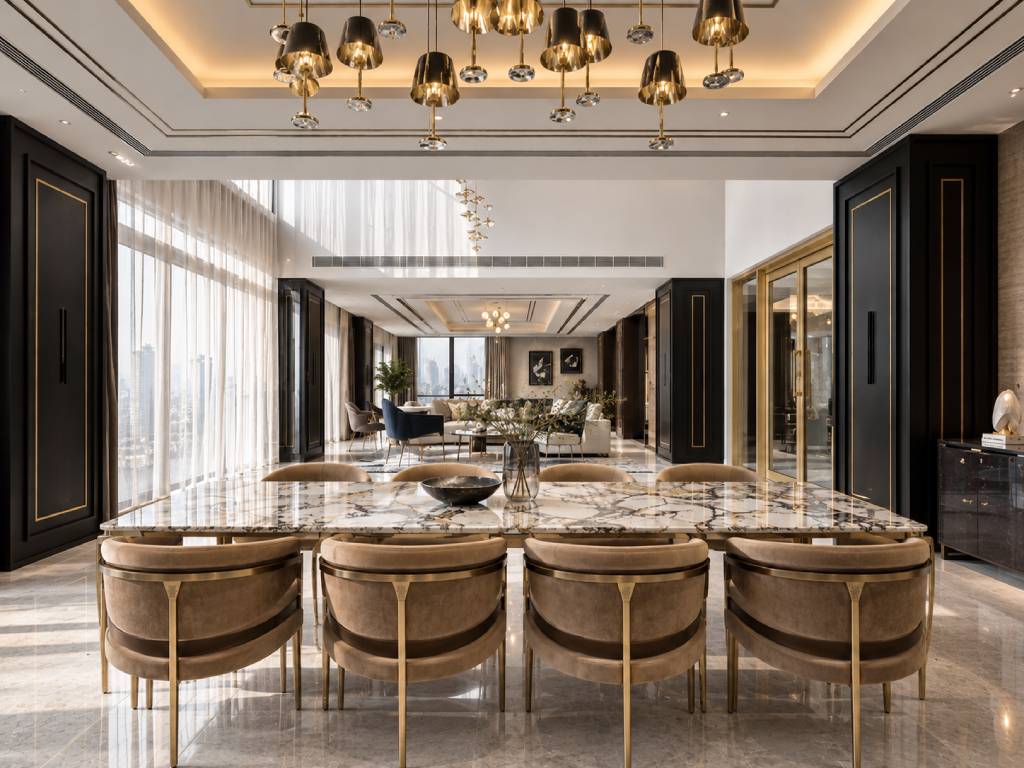
Eight-seater dining room table designs for large homes need enough visual and physical space around them. A table measuring about 220 to 240 cm in length can seat eight comfortably, though the exact size depends on chair width, armrests and place settings.
In villas, penthouses and spacious apartments, an eight-seater table can become the main anchor of the dining room. A larger pendant, artwork, rug or buffet can help the room feel balanced rather than leaving the table isolated.
Choose a base that provides stable support without restricting legroom. The height for dining room table selection should also work with the height of the chair seat so guests can sit comfortably through longer meals.
Matching Your Dining Table to Your Interior Style
A dining table feels most resolved when its materials, lines and proportions relate to the room around it. Consider the flooring, wall finishes, lighting, upholstery and nearby storage before choosing the table.
Contemporary Dining Rooms
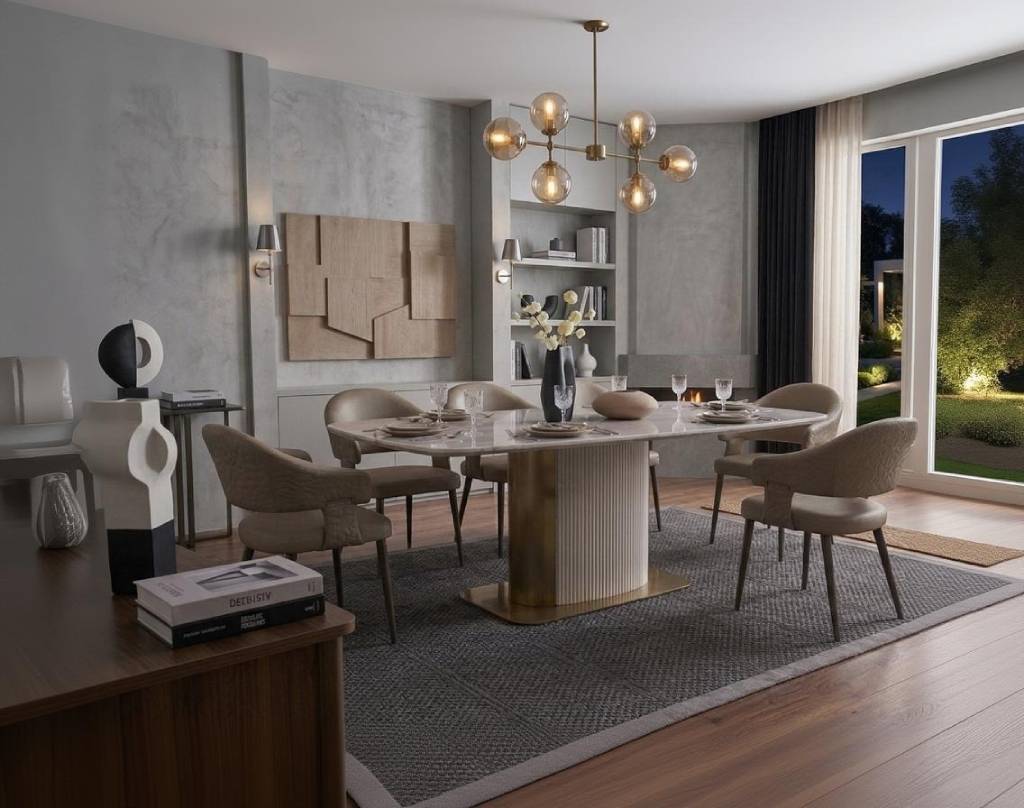
Clean silhouettes, subtle detailing and mixed materials define many contemporary dining spaces. A dining table modern design can be a slim stone top with a wood or metal base, or just a wooden profile with precision construction and minimal details.
Homeowners searching through dining tables contemporary design ideas could choose fluted bases, soft, rounded edges, matte finishes and built-in metal accents. These aspects generate intrigue while keeping a placid visual language.
Minimalist Interiors
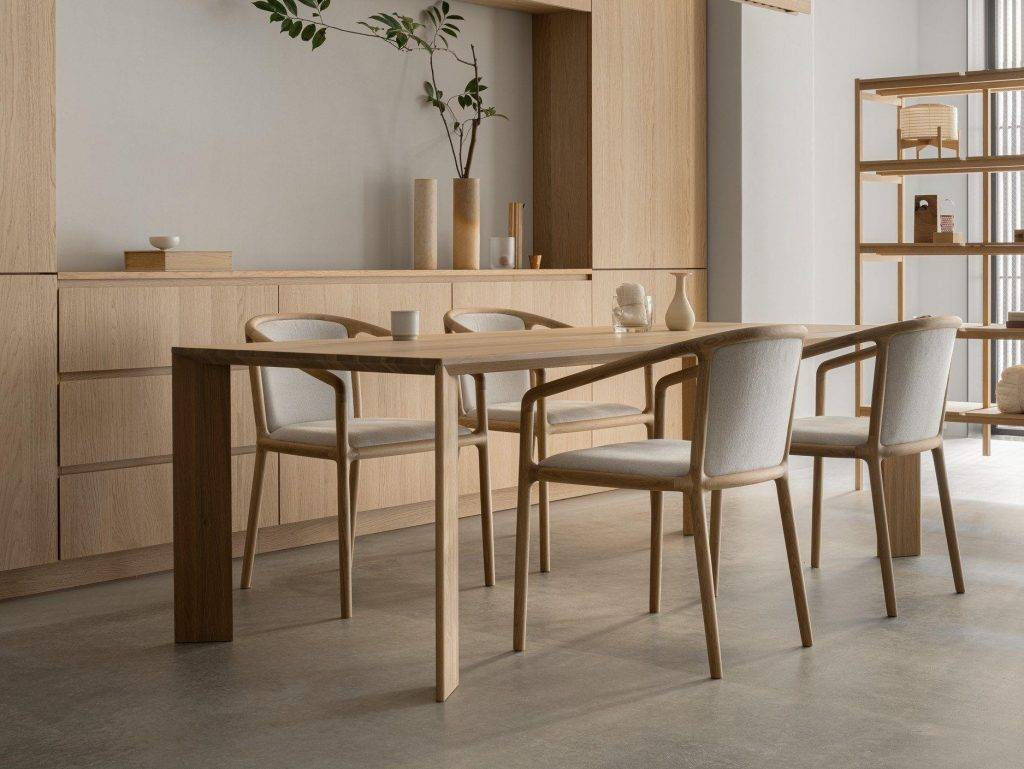
Minimalist dining rooms need clear proportions and less competing features. A slim profile table will help make the room feel open, especially in flats where the dining area is in the same space as the living room or kitchen.
The table is simple, supported by neutral finishes, hidden storage and subtle lighting. A lighter wooden dining table design can add warmth to pale rooms, while darker wood will add clarity to stone or cream floors. Select chairs with a small frame and avoid big centrepieces that cut across sightlines.
Luxury Dining Spaces
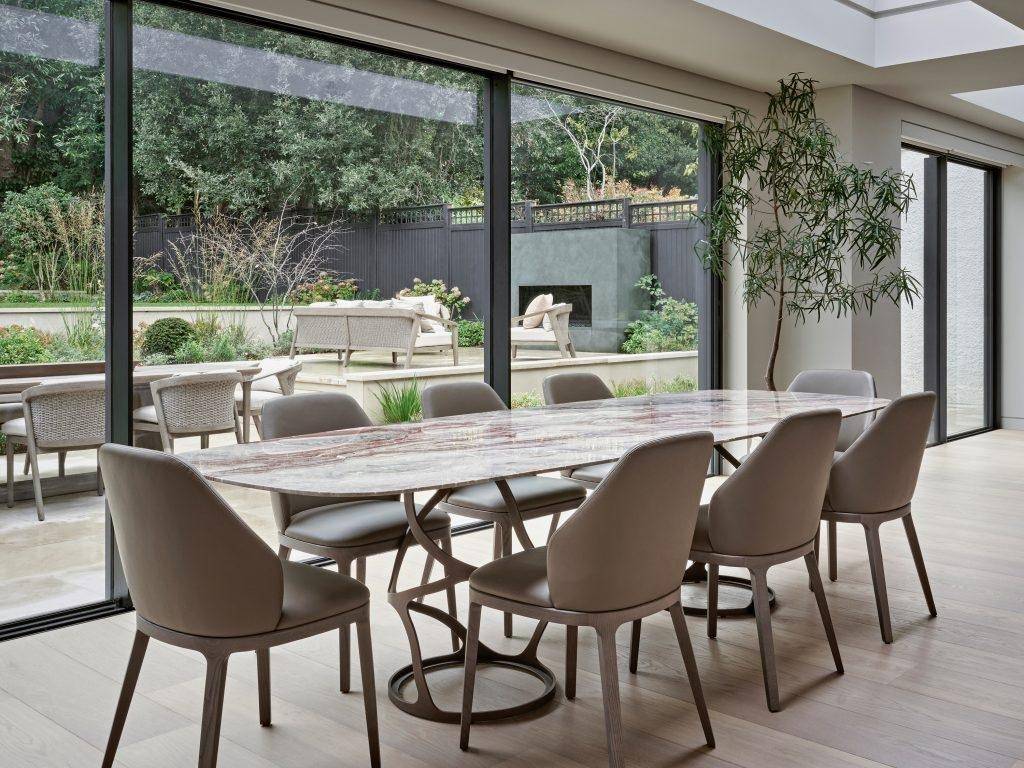
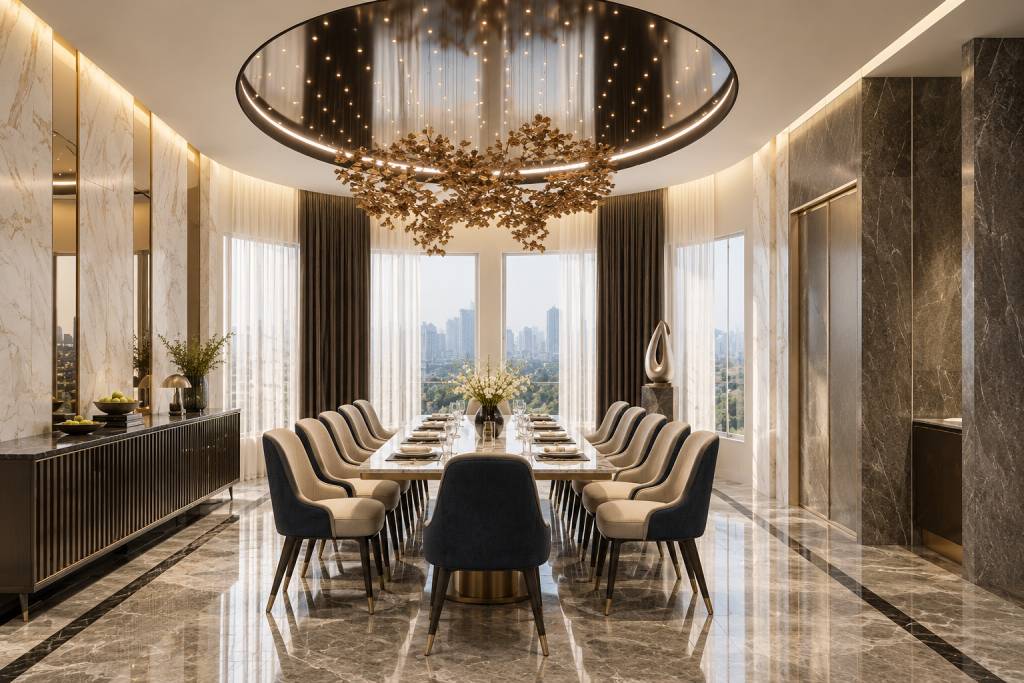
Luxury dining room tables are judged by the quality of materials, workmanship and proportion. A statement stone top, hand-finished wood surface or sculptural base may provide a strong point of focus for a room, especially when accompanied by intelligent lighting and tailored seating.
Scale is important. A substantial table needs enough breathing room, while a refined edge profile and balanced base prevent it from feeling bulky. In formal dining rooms, integrated storage for crockery, glassware and serving pieces can also make entertaining smoother.
Design Details That Make a Dining Table Stand Out
The finer details of a dining table should be chosen around daily use, maintenance and the role it will play in the room. wood grain, stone-vein alignment, edge profiles and base construction influence appearance, but also affect cleaning, legroom, stability and long-term wear. In a designer dining table, these decisions should respond to the household and the room.
| Material | Choose it when | Check before finalising |
| Natural wood | The table will be used daily and may need refinishing over time | Protection from heat, spills and scratches |
| Stone or marble | The table is intended to be a focal point or support frequent entertaining | Slab weight, sealing needs and base engineering |
| wood and metal | A lighter-looking profile or longer span is required | Joint quality, coating durability and finish consistency |
Natural Wood Finishes
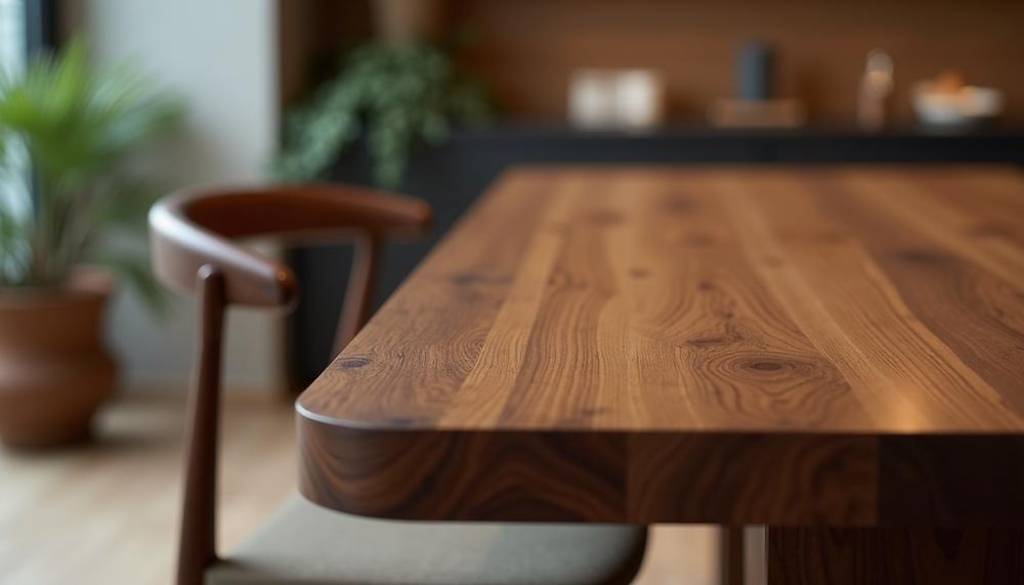
Choose natural wood when the dining table needs to work with changing upholstery, lighting and wall finishes. Oak and ash suit lighter contemporary rooms, while walnut and teak bring greater depth to formal interiors. On larger tops, review the grain and joins at full-table scale before approval.
For a frequently used wooden dining table design, a matte or low-sheen finish is generally more forgiving of fingerprints and minor marks. A lighter stain can help a compact dining area feel more open, while a darker stain gives the table definition against pale stone flooring or neutral upholstery. Confirm how the finish responds to hot serving dishes, spills and routine cleaning.
Wooden dining room table designs are useful when the room may be updated over time because wood pairs easily with upholstered seating, metal details and different lighting styles. The option to repair or refinish the surface can add practical value in a family home.
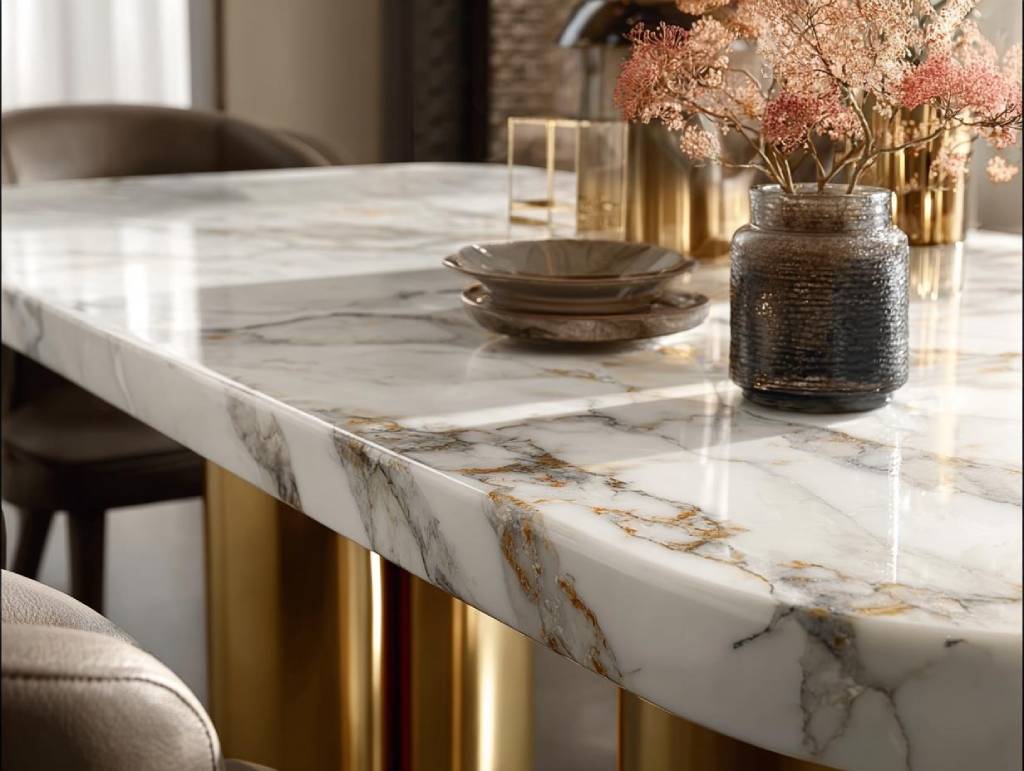
Stone and Marble Tabletops
Choose stone or marble when the table is intended to hold visual importance in the room and the household is comfortable with its care requirements. Review the complete slab before fabrication so the veining works with the tabletop shape and the strongest movement appears in the right place.
| Design decision | Best suited to |
| Light, softly veined stone | Compact rooms or visually lighter interiors |
| Dark or strongly veined stone | Larger dining rooms where the table is a focal point |
| Slim edge profile | Contemporary spaces and lighter-looking bases |
| Thick edge profile | Larger rooms with substantial furniture |
The base should be engineered around the slab’s weight rather than chosen only for appearance. Sealing, stain resistance and cleaning methods should be confirmed before selection, particularly when the table will be used for daily meals. In homes that entertain often, check how the surface responds to hot serving dishes and prolonged use.
Sculptural Bases and Designer Forms
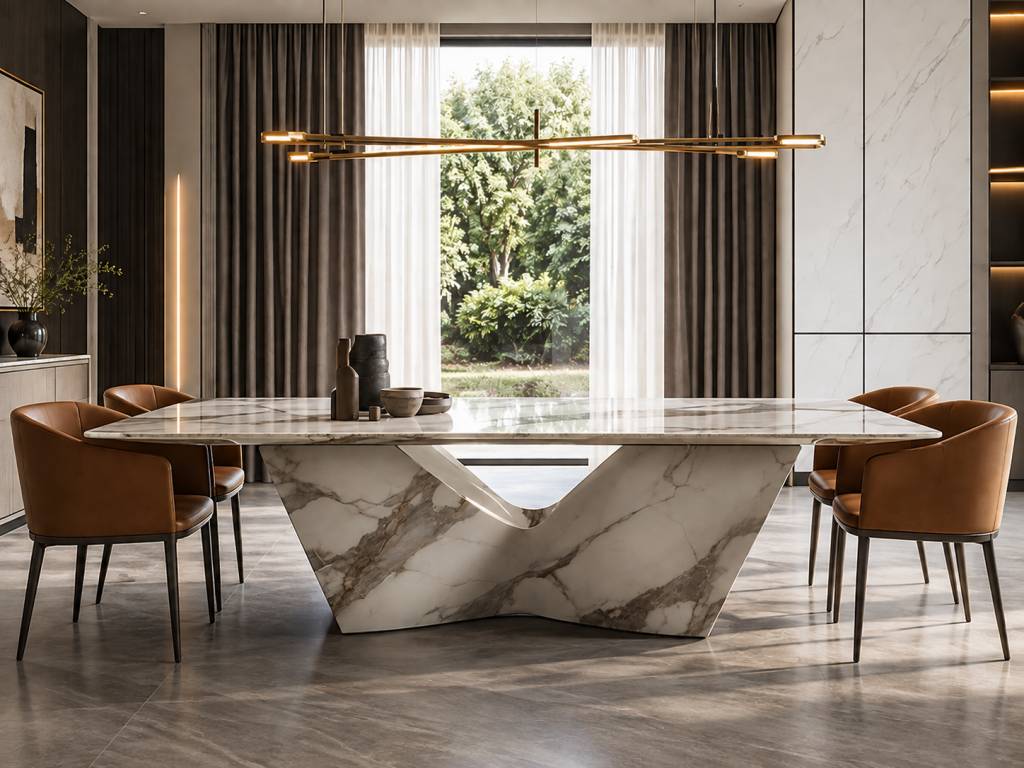
The base should be selected according to seating flexibility as well as visual impact. A central pedestal works well for round tables and makes chair placement easier. Twin pedestals suit longer rectangular tables because they support the top without placing legs at each corner. Four-leg bases provide familiar stability, though chair positions should be checked carefully.
Curved pedestals, intersecting planes, carved wood and metal frameworks work well when the table is visible from several parts of an open-plan home. Review the design from the living room, kitchen and entrance and test every chair position before finalising it. Knee clearance, foot space and stability should remain consistent across all seats.
Styling Details That Complete Your Dining Space
Styling is most effective when all of the elements work in concert to support the scale and mood of the table. Create the room in a few coordinated layers:
- Pick a low centrepiece, fresh flowers or greenery that provides appeal without disrupting discussion.
- Select crockery, glasses and table linen in colours that match the surface and chair upholstery.
- Add a runner, tray or candle arrangement only when it suits the table’s proportions.
- Select dining chairs for comfort first, then refine the upholstery, back profile and leg finish.
- Position pendant lighting centrally and at a height that illuminates the table without interrupting views.
- Use a rug only when it is large enough for chairs to remain on it when pulled out.
- Complete the room with artwork, a buffet unit or a display niche that relates to the table.
At Design First, dining spaces are planned as complete settings, with the table, chairs, lighting, storage and surrounding finishes considered together. The same consideration extends across our end-to-end home interiors, creating a sense of continuity from one space to the next.
FAQ
Try to match the material, colour, form and scale of the table to the flooring, lighting, furniture and architectural finishes that are already in the space.
First take measurements of the room and then choose a design that makes it easy to walk around and sit comfortably. Square rooms are accompanied by round tables, elongated areas by rectangular tables.
Use proportion and material as the link. Simple forms suit minimalist spaces, mixed materials work well in contemporary rooms and richly finished wood or stone can support more formal interiors.
Round tables are preferable for small rooms or square spaces and lend themselves to conversation, whereas rectangular tables are good for longer areas and bigger seating needs.
Usually a rectangular table about 160 to 180 cm long will comfortably seat six persons. And always leave plenty of space around it for chairs and movement.
The ideal pick is the one that fits the size of the room, the size of the family and the daily schedule. Clean-lined rectangular or round tables in oak, stone or mixed materials work well in most modern houses.
Natural wood, marble and other quality stones bring strength to luxury homes. What the ideal material is relies on the beauty of the area, expectations for maintenance and how much it will be used on a day to day basis.