Modern wardrobe design is no longer limited to storing clothes. It influences how a bedroom is organised, how the available space is used and how the interiors come together.
With so many layouts, finishes, materials and storage options available, choosing the right combination takes careful planning. A wardrobe should organise your belongings, complement the bedroom’s design and suit your daily routine.
A design that suits one home may not be the right choice for another because every bedroom has different dimensions, storage requirements and design preferences.
Why Modern Wardrobe Design Matters in Luxury Bedrooms
A wardrobe occupies one of the largest spaces in a bedroom, which means its design has a direct impact on how the entire space looks and functions.
A finish that clashes with the flooring or wall treatment can make the room feel disconnected, while a poorly planned layout may leave storage unused even in a large wardrobe. Good wardrobe design considers the room as a whole, balancing proportions, materials and storage before finalising the appearance.
Planning the wardrobe alongside elements like wall panel design also creates better visual continuity, allowing finishes and details to complement each other instead of competing for attention. The result is a bedroom that is easier to organise, easier to use and visually consistent from every angle.
Luxury Wardrobe Design Ideas Worth Considering in 2026
The right wardrobe design depends on how your bedroom is planned and how you use it every day. Comparing different configurations helps you understand which option offers the best balance of storage, accessibility and visual appeal for your space.
Sliding Door Wardrobes
Sliding door wardrobes are well suited to bedrooms where saving floor space is a priority. Since the shutters move along a track, they eliminate the clearance needed for opening doors, making movement around the room more comfortable.
Large shutters in wood veneer, tinted glass or textured laminates also create a cleaner appearance by reducing visual breaks across the wardrobe, making them a popular choice for contemporary bedroom interiors.
Design Consideration: Sliding wardrobes improve circulation, but one section always remains covered because the shutters overlap. Before finalising the design, check whether the internal layout allows easy access to frequently used shelves, drawers and hanging sections.
Walk In Wardrobes
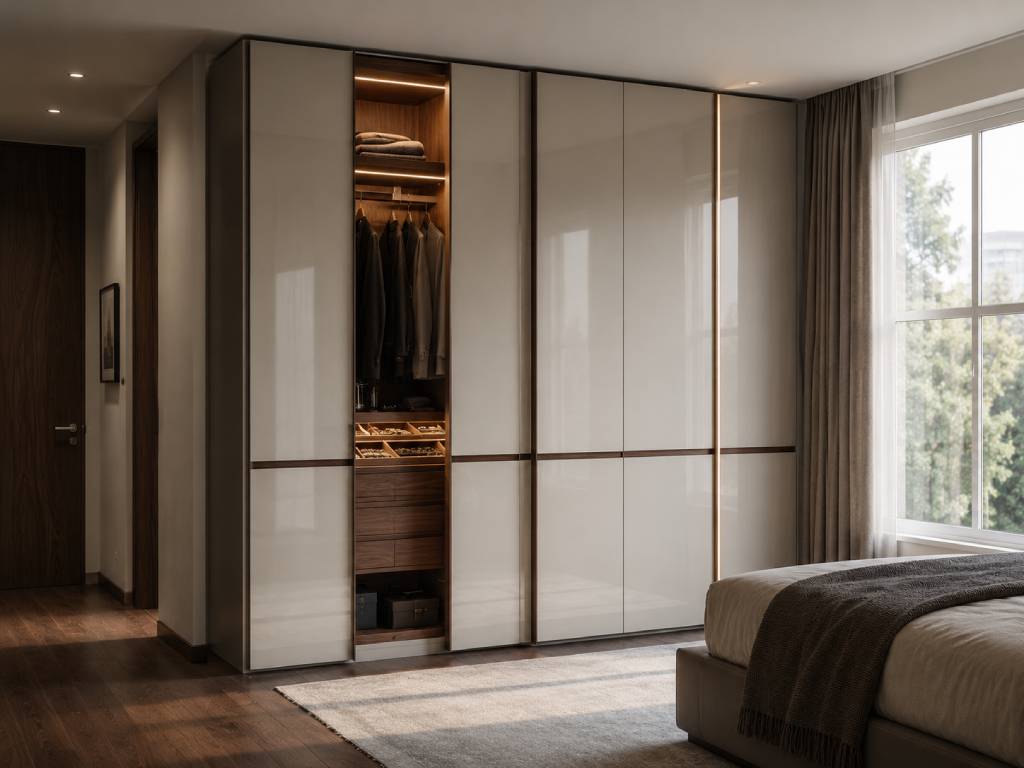
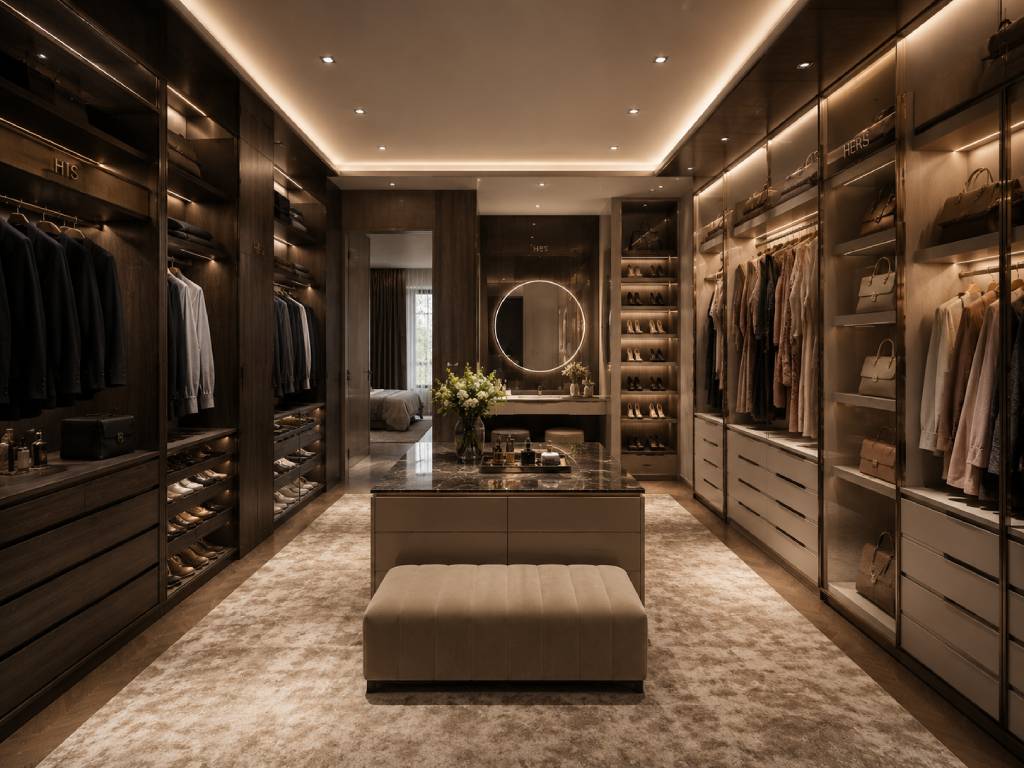
A walk-in wardrobe creates a dedicated dressing area instead of concentrating storage behind one set of shutters. Separate zones for clothing, footwear, handbags, jewellery and accessories improve visibility and make organisation much simpler.
This layout works best when enough space is available to move comfortably while allowing lighting, mirrors and storage to function together without making the adjoining bedroom feel smaller.
Hinged Door Wardrobes
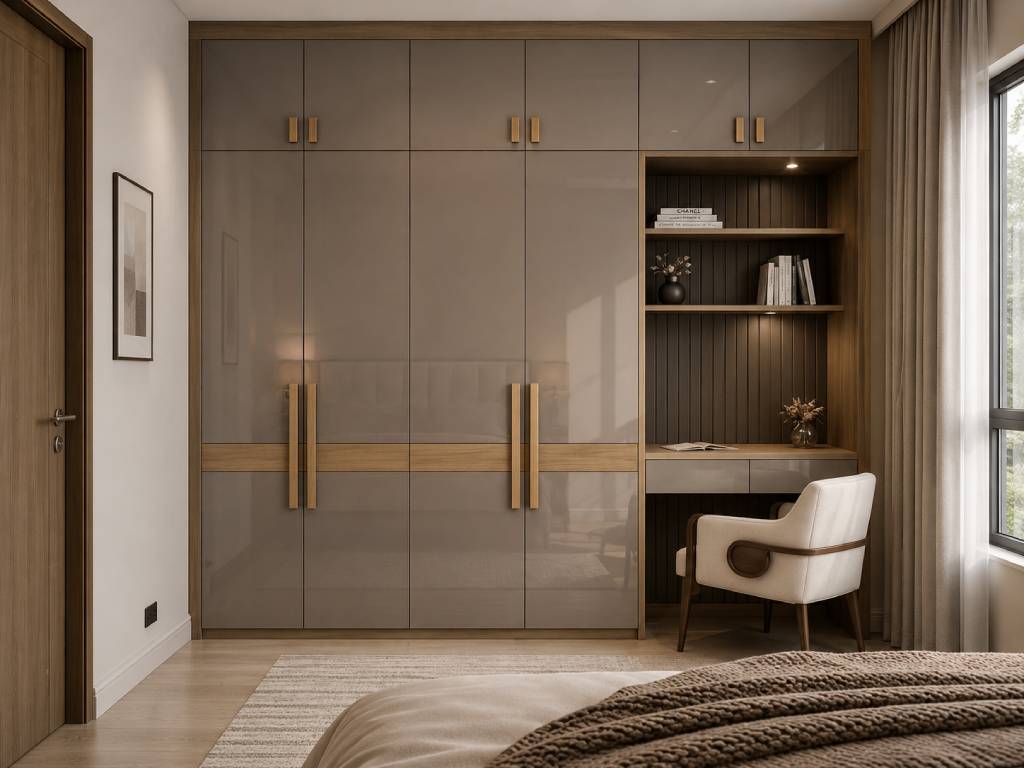
Hinged wardrobes remain one of the most practical configurations because every section can be opened at the same time. This makes it easier to organise shelves, install pull out accessories and access items stored across the entire wardrobe.
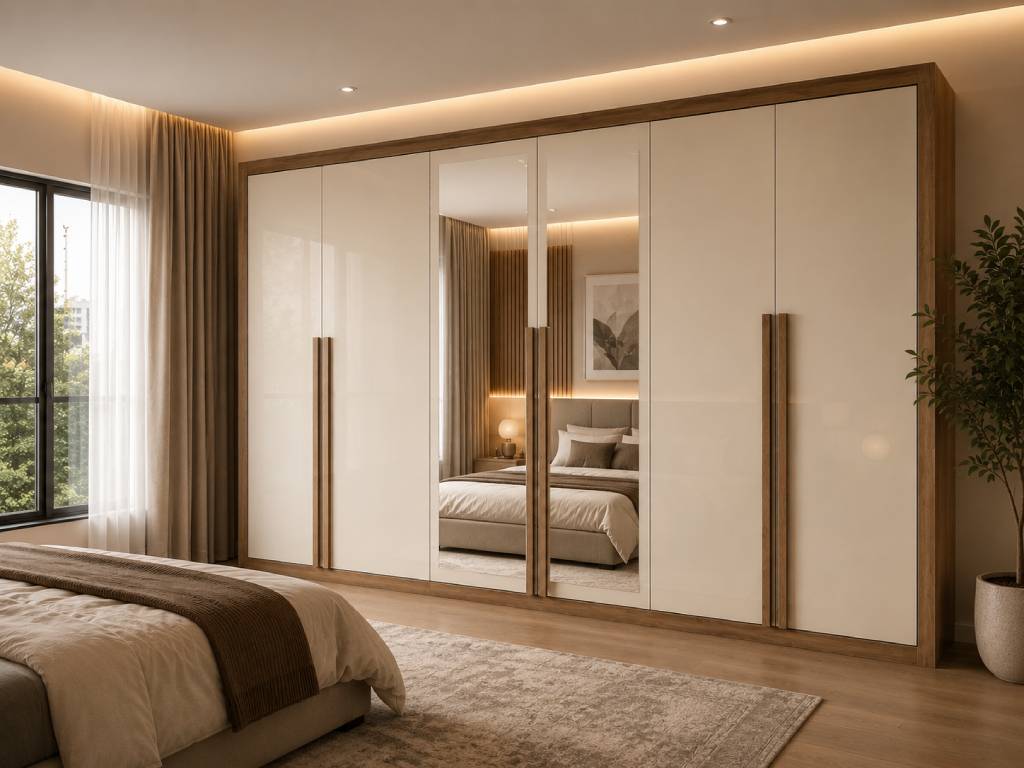
The shutters also support a wider range of finishes, including fluted panels, mirrors, wood veneers and decorative detailing, making them suitable for both modern and classic bedroom interiors.
Floor to Ceiling Wardrobes
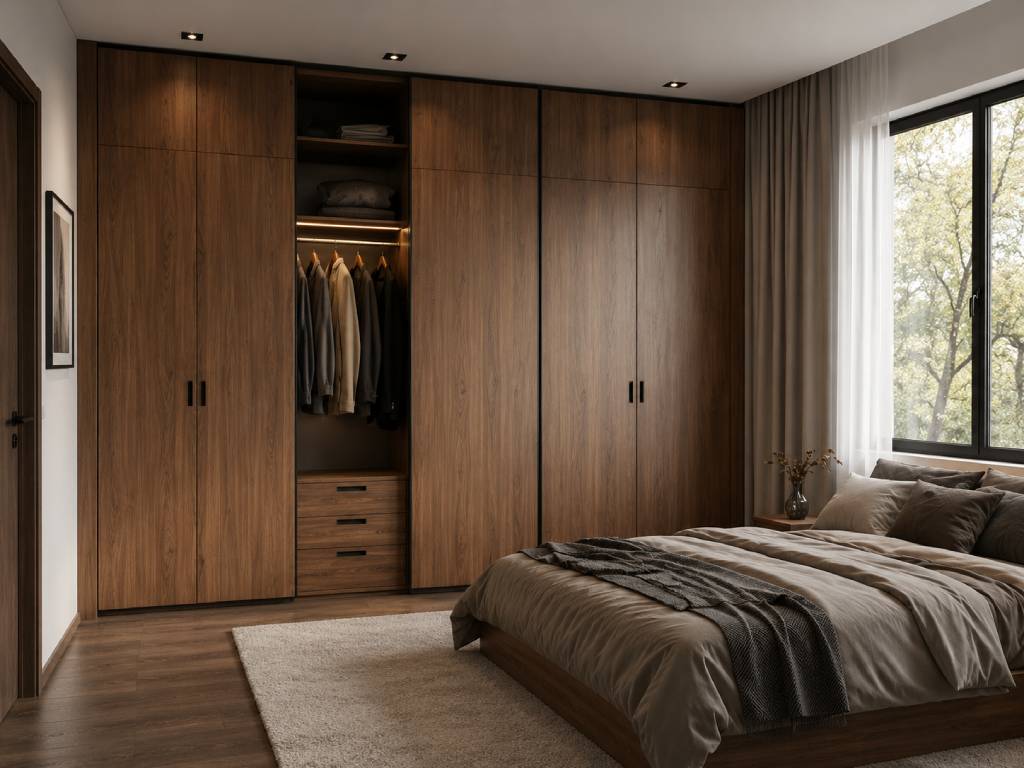
Floor to ceiling wardrobes maximise the available height instead of leaving unused space above the cabinetry. Upper compartments can accommodate luggage, seasonal clothing and occasional use items, keeping the lower sections free for everyday essentials.
Extending the wardrobe to the ceiling also creates stronger vertical lines, helping the cabinetry feel integrated with the room instead of appearing as a separate luxury furniture unit.
Planning Tip : Floor to ceiling wardrobes should be planned before false ceiling layouts, lighting positions and electrical points are finalised. Coordinating these elements early helps avoid unnecessary design compromises during installation.
Choosing the Right Materials and Finishes for Your Wardrobe
The wardrobe’s appearance comes from its finish, but its long term performance depends on the material beneath it. Understanding both helps you choose a wardrobe that suits your bedroom, maintenance preferences and everyday use.
Modern Wardrobe Finish for Luxury Bedrooms
The wardrobe finish shapes the bedroom’s overall character. Pairing it with complementary bedroom colour combinations creates a more cohesive look, allowing materials, furniture and finishes to work together without competing for attention.
Some popular wardrobe finishes include:
- Natural wood veneer: Brings warmth, distinctive grain patterns and a premium appearance.
- Smoked or tinted glass: Adds depth while reducing the visual weight of large wardrobes.
- Fluted panels: Introduce texture and dimension without relying on bold colours.
- Matte lacquer: Creates a smooth, contemporary surface with a clean finish.
- Metal detailing: Frames shutters or handles with subtle contrast and refined detailing.
Anchor this : bedroom colour combinations
Best Materials for Modern Wardrobe Design
Behind every wardrobe finish is a core material that influences durability, strength and long term performance. While finishes determine the wardrobe’s appearance, the material beneath them affects how well the shutters hold their shape, resist moisture and withstand everyday use. Comparing these materials before finalising the design can help you make a more informed investment.
Material Why It’s Used Best Suited For Plywood Strong, durable and offers good moisture resistance Premium wardrobes designed for long term use MDF Smooth surface that works well with painted and routed finishes Matte lacquer and decorative shutter designs HDHMR boards Higher moisture resistance with improved structural stability Homes in humid environments and frequently used wardrobes Particle board Cost effective but comparatively less durable Budget focused wardrobe solutions
Material Selection Tip: A premium finish cannot compensate for a poor quality core material. Asking about the board used inside the wardrobe is just as important as selecting the shutter finish, especially for wardrobes expected to last for many years.
Luxury Wardrobe Accessories That Improve Everyday Organisation
A well designed wardrobe is shaped as much by its internal planning as its external appearance. The right accessories help organise clothing and personal belongings more efficiently, making everyday routines simpler while reducing clutter inside the wardrobe.
Accessories That Add Everyday Convenience
Not every wardrobe requires the same accessories. The most practical choices depend on what you own and how you organise it. A few well planned additions can make the wardrobe noticeably easier to use without increasing its overall size.
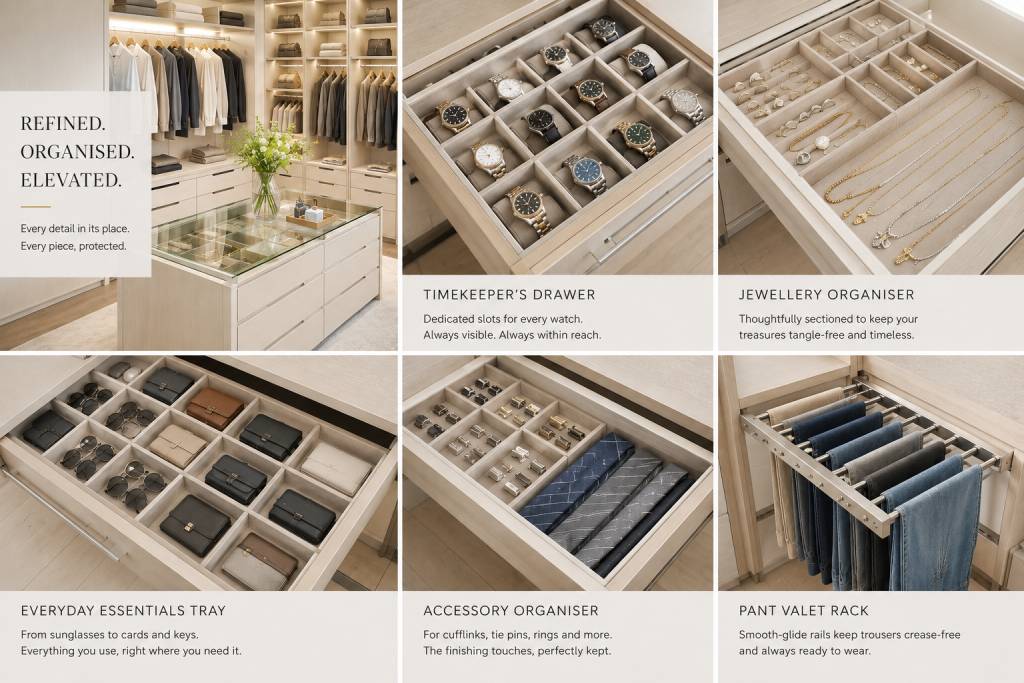
- Dedicated watch drawers protect watches from scratches while keeping each piece visible and easy to access.
- Jewellery organisers with separate compartments prevent necklaces, rings and bracelets from getting tangled.
- Velvet lined accessory trays provide a safe place for sunglasses, cufflinks and other delicate valuables.
- Pull out trouser racks and luxury jeans hangers keep garments neatly arranged, making it easier to find what you need without disturbing the rest of the wardrobe.
- Valet rods offer temporary hanging space for outfit planning, freshly ironed clothes or garments that need to be worn again.
Smart Features That Personalise the Wardrobe Experience
Luxury wardrobes are increasingly designed around convenience rather than additional storage. Integrated features help organise belongings more efficiently while making the dressing experience more comfortable.
Some features worth considering include:
- Sensor based lighting that automatically illuminates the wardrobe when opened.
- Illuminated display shelves for handbags, watches or decorative accessories.
- Rotating corner systems that improve access to deep storage areas.
- Concealed laundry sections that keep used clothing separate without adding visible baskets to the bedroom.
- Fragrance compartments that help maintain a fresh wardrobe environment.
- Integrated mirrors that make dressing more convenient without occupying additional floor space.
The most successful wardrobe layouts don’t include every available accessory. They include the ones that genuinely support your lifestyle and make everyday organisation easier.
Designing a Wardrobe Around Your Lifestyle
A wardrobe should be planned around your daily routine, not a standard storage layout. The amount of hanging space, shelving and drawers depends on what you own and how you use it. Asking a few practical questions before the design stage can help create a wardrobe that remains organised and functional for years.
Consider questions such as:
- Do you hang more clothes than you fold?
- Do you need dedicated storage for shoes, handbags or accessories?
- Would you prefer open display shelves or concealed storage?
- Which items should remain within easy reach every day?
Answering these shape everything from the internal layout to the choice of accessories and storage zones, making the wardrobe more intuitive to use.
At Design First, the Design First Style Test helps uncover these preferences early, allowing wardrobes to be planned around individual lifestyles as part of a complete residential interior designer approach.
FAQs
Yes, if you have sufficient space. Walk in wardrobes improve organisation, provide dedicated storage for clothing and accessories, and create a more convenient dressing experience than conventional wardrobes.
Choose high quality finishes, maintain a restrained material palette, integrate lighting, and include accessories like jewellery organisers, valet rods and concealed storage for a refined appearance.
The cost varies based on dimensions, materials, finishes, internal accessories and design complexity. A detailed consultation helps determine the most suitable solution for your space and requirements.
Floor to ceiling wardrobes, fluted finishes, smoked glass shutters, integrated lighting, handleless designs and personalised storage layouts are among the leading luxury wardrobe trends in India for 2026.
The best wardrobe design depends on your bedroom layout, storage needs and lifestyle. Floor to ceiling, walk in and sliding wardrobes are popular choices for creating organised and visually balanced spaces.
Plywood and HDHMR boards are preferred for their durability and moisture resistance. Pairing them with premium finishes helps wardrobes perform well while maintaining their appearance over time.
Luxury wardrobes commonly use plywood or HDHMR boards with finishes such as natural wood veneer, smoked glass, matte lacquer, fluted panels and metal detailing for durability and refined aesthetics.
A luxury residential interior design firm can create bespoke wardrobes tailored to your space, lifestyle and storage needs as part of a personalised home design process.
Sliding door, hinged and floor to ceiling wardrobes are suitable for most modern Indian homes. The right choice depends on available space, storage habits and the overall interior style.